Jiuzhaigou Visual Travel Guide
Illustrated city overview — not a scale map. Use Routes below for day-by-day stops you can open in Planner.
Jiuzhaigou · 九寨沟
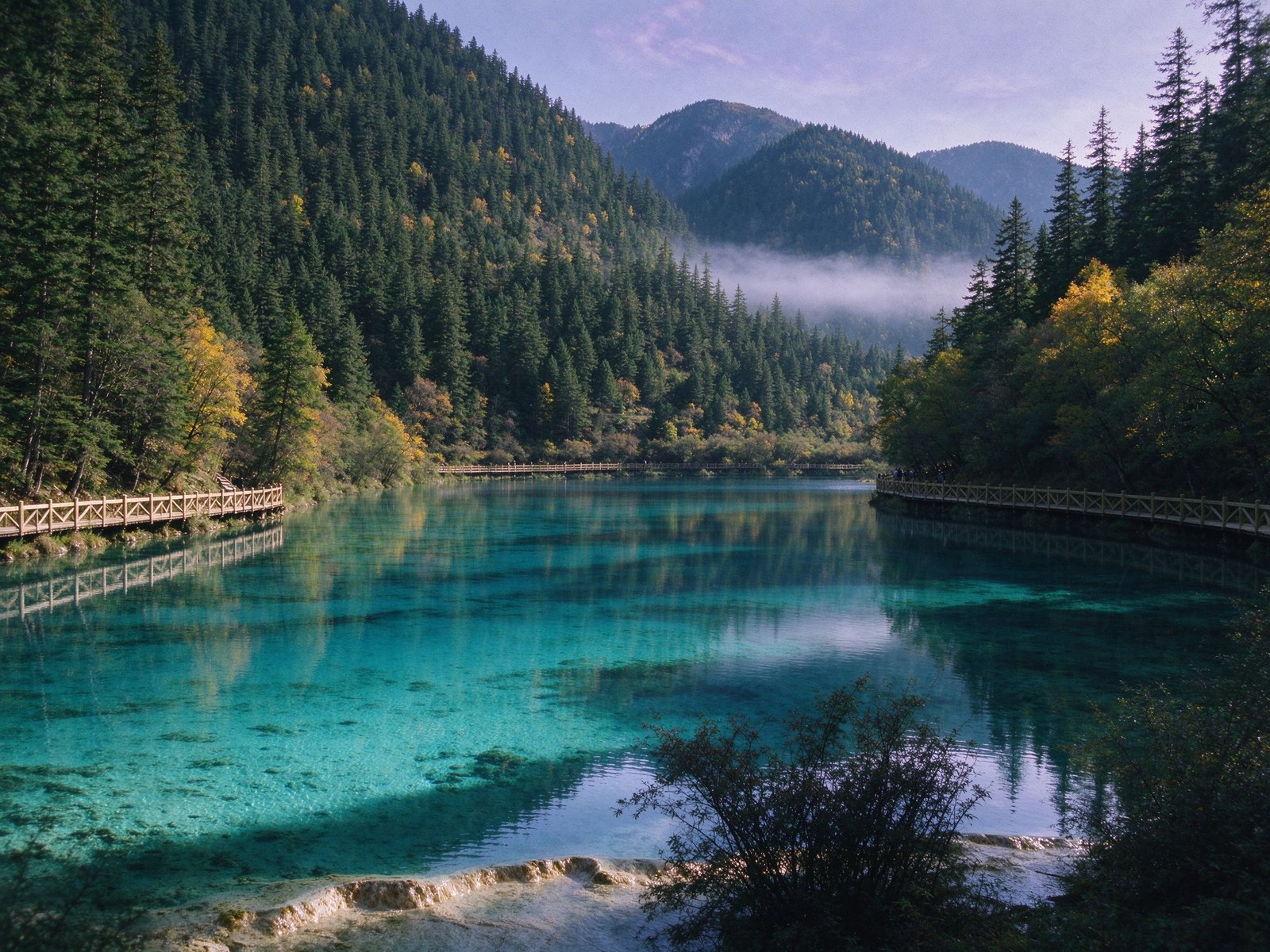
Jiuzhaigou is a 72,000-ha UNESCO valley of travertine lakes in impossible blues and greens, reachable only by timed eco-bus through a Y-shaped gorge—treat it as one disciplined alpine day capped at the 41,000 daily visitor limit, then pair it with Huanglong's golden travertine terraces across the mountains.
City-level visual guides and reviewed photos — infographics are illustrated overviews, not scale maps.
Illustrated city overview — not a scale map. Use Routes below for day-by-day stops you can open in Planner.
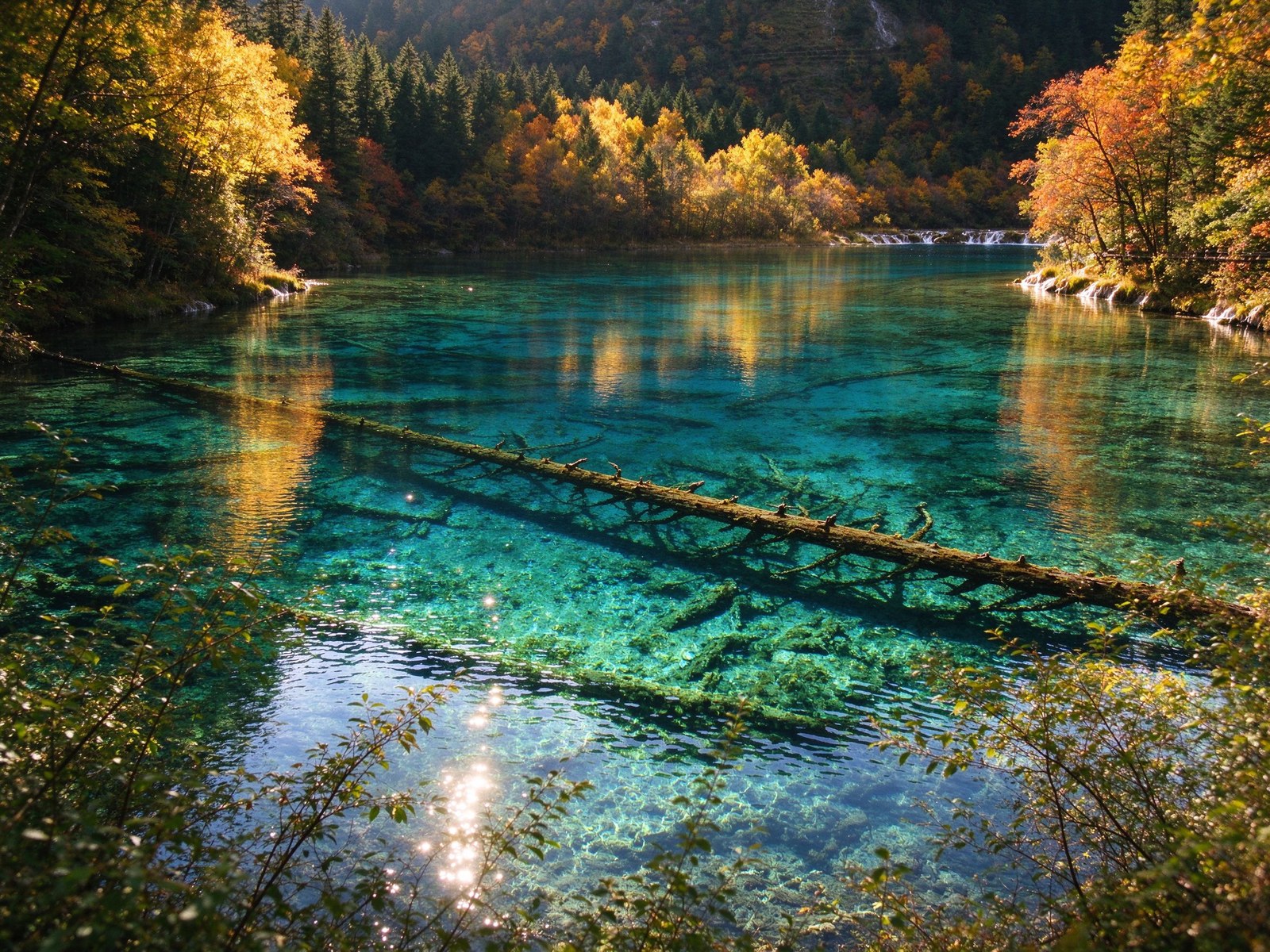
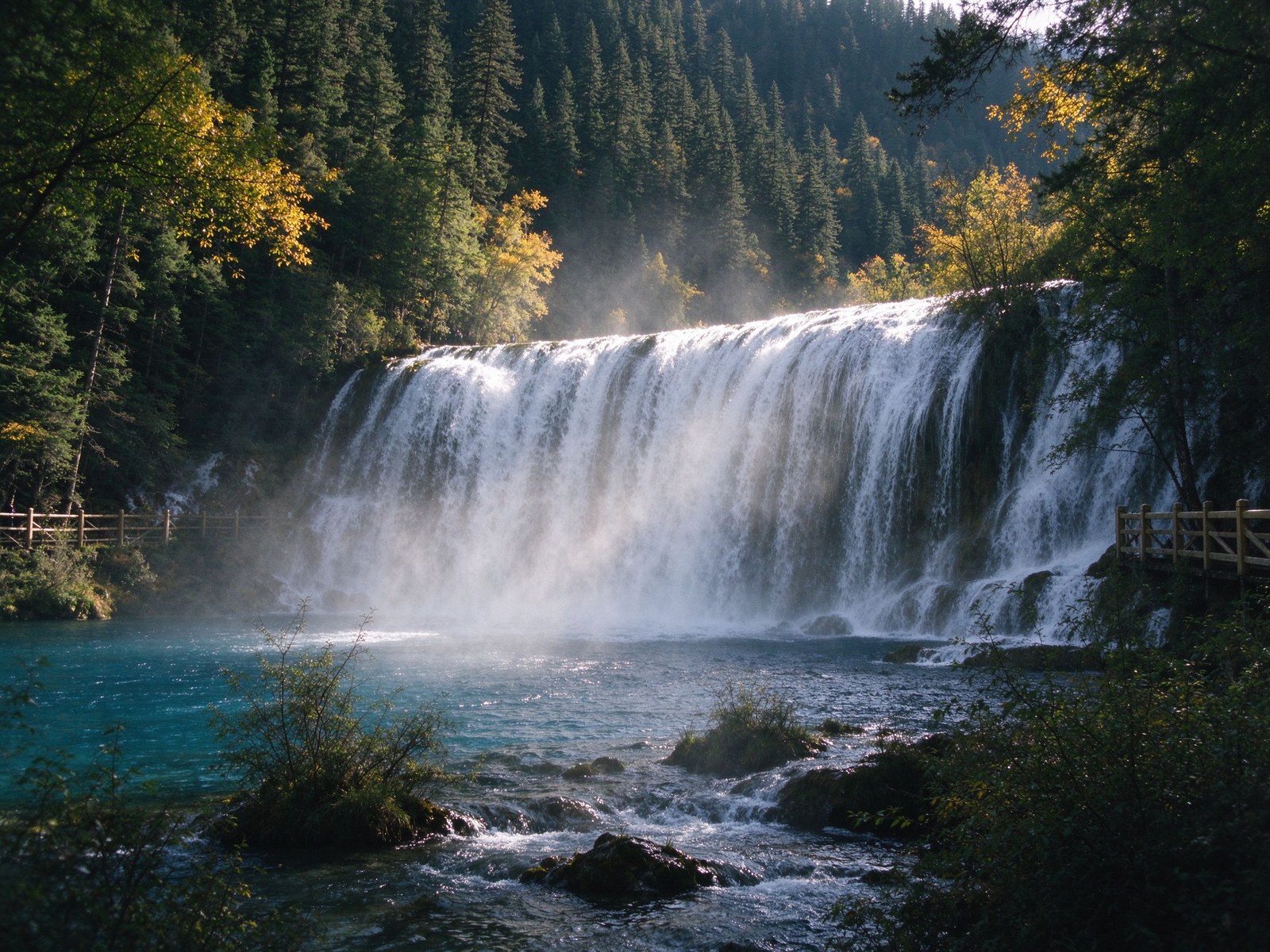
Travertine shelves and mineral-rich water scatter light into turquoise, cobalt and purple. Start at Five Flower Lake and look straight down—you see submerged tree trunks preserved on the tufa floor. That is the whole point of the trip.
You cannot free-roam the valley; the eco-bus takes you up the Y and you walk back down. Board the first bus to Long Lake, drift down Zechawa, Rize and Shuzheng on foot—pacing, not rushing, is how you see it.
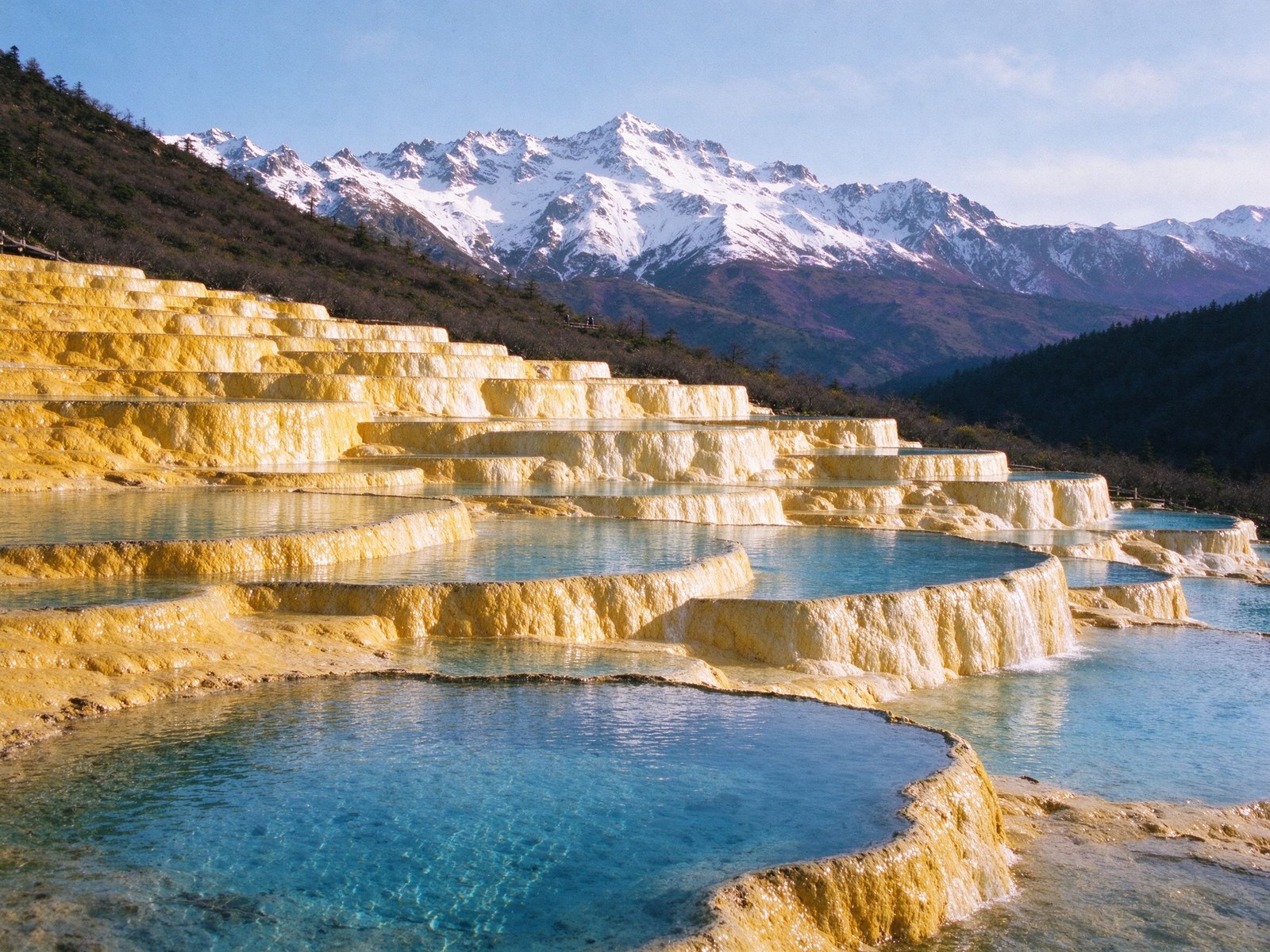
Across the Min Mountains in Songpan County, Huanglong lays 3,400+ travertine pools in a golden dragon down the valley. Do it as a cable-car-up, walk-down half-day so you are not too tired for the Five-Colored Pool.
The city’s signature line — depth entry, not a checklist.
The signature Jiuzhaigou sequence: enter the mouth by 7:30, take the first eco-bus non-stop to Long Lake (Zechawa Valley), walk down to Five-Color Pond, backtrack to the Nuorilang Y-junction, then spend the afternoon on the Rize-side boardwalks past Pearl Shoal and Five Flower Lake, finishing through the Shuzheng lakes and Tibetan villages. Overnight outside the gate in Zhangzha Town. Add Huanglong as a cable-car-up, walk-down half-day the next morning.
Add to trip to compare and prepare; check partner links for slots and price when shown.
Experience listings are still growing — plan with routes & culture, or request planning help.
Beyond ticket notes — read the city’s character first.
Jiuzhaigou is an alpine travertine (tufa) system: mineral-rich water precipitates calcium carbonate on the lake beds, scattering short light waves. Submerged ancient tree trunks sit on the pale tufa floor and stay preserved—look down at Five Flower Lake to see them.
The name means 'valley of nine villages'. Three gullies—Shuzheng, Rize, Zechawa—join at the Nuorilang junction into a Y. The eco-bus runs this loop; you read the valley as three drainage basins, not a single straight road.
The park runs 'inside-gorge visit, outside-gorge sleep' (沟内游、沟外住): no lodging inside and everyone leaves by 18:00. After the 2017 earthquake damaged roads, the valley closed for two years and reopened in 2019 with stricter carrying-capacity and timed-entry rules.
This is Ngawa Tibetan-and-Qiang country—prayer-flagged villages, Zaru Temple, yak-butter tea and hand-grabbed yak meat. Zhangzha Town and Bianbian Street are modern tourist strips; read them as places to eat Tibetan food, not as untouched old villages.
UNESCO counts ~140 bird species here and lists the valley as important giant-panda and Sichuan-takin habitat. The crowds stay on the boardwalks; the old-growth forest above the lakes is the quieter reason the site is protected.
Tickets, duration, transport — ready for your trip cart.
PopularReal-name timed reservation via the '九寨沟旅游官方平台' or '阿坝旅游' WeChat mini-program; daily cap 41,000. Carry the passport y…
No separate booking; use the park timed-entry reservation. Stay on the boardwalk—do not wade or step onto the travert…
 Popular
No separate booking; park timed entry covers it. After the 2017 earthquake the waterfall was partly re-formed—view fr…
 Popular
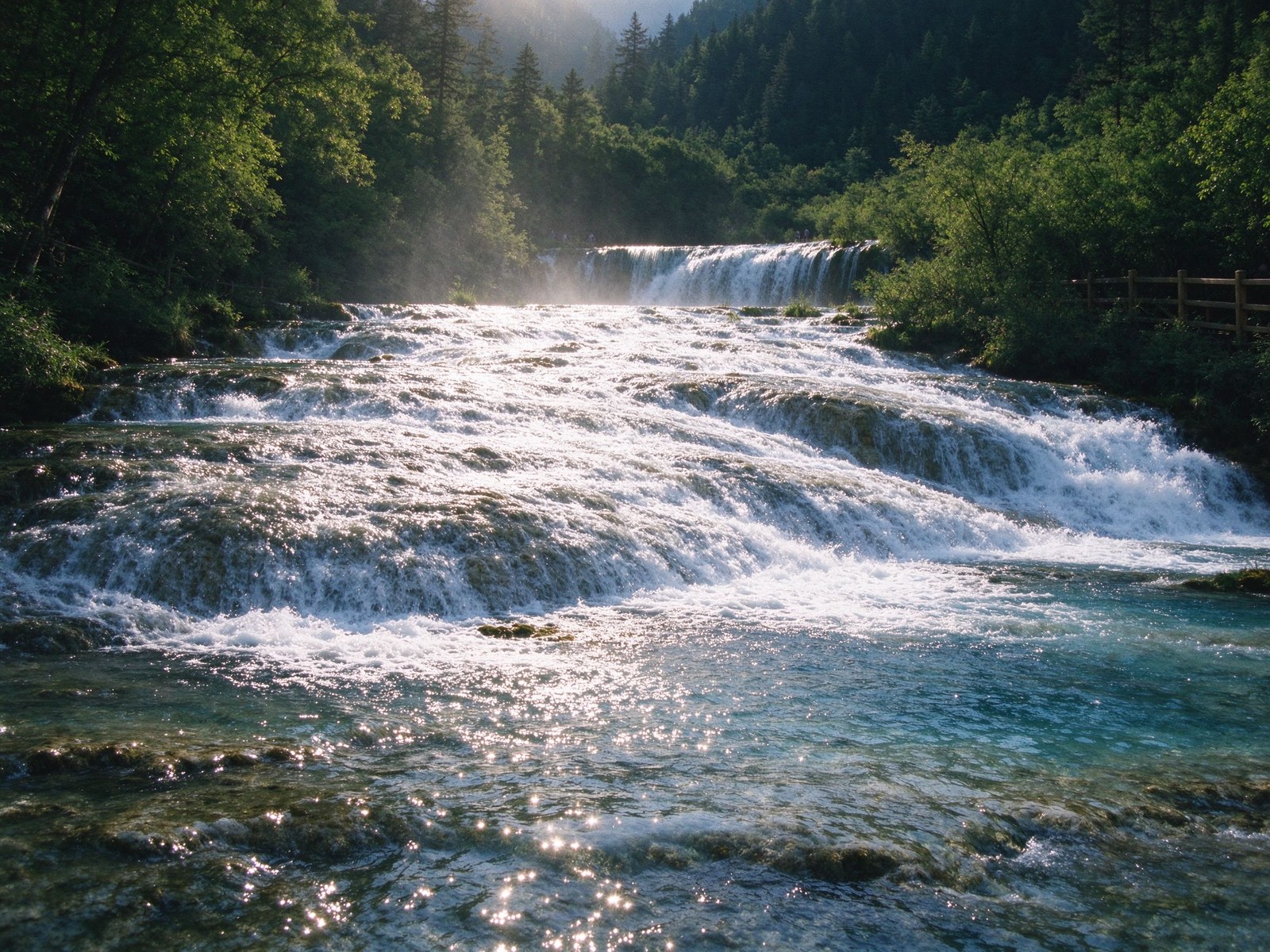
No separate booking; park timed entry covers it. Stay behind rails—the travertine edge is fragile and slippery.
 Popular
Fully real-name online, no on-site window—book via 阿坝旅游网 (www.abatour.com) before 18:00 the day before entry; daily c…
Executable skeletons: day-by-day anchors you can trim to fit.
1-day
For travelers already based at the valley mouth. The single classic Jiuzhaigou day—booked timed entry, no detours.
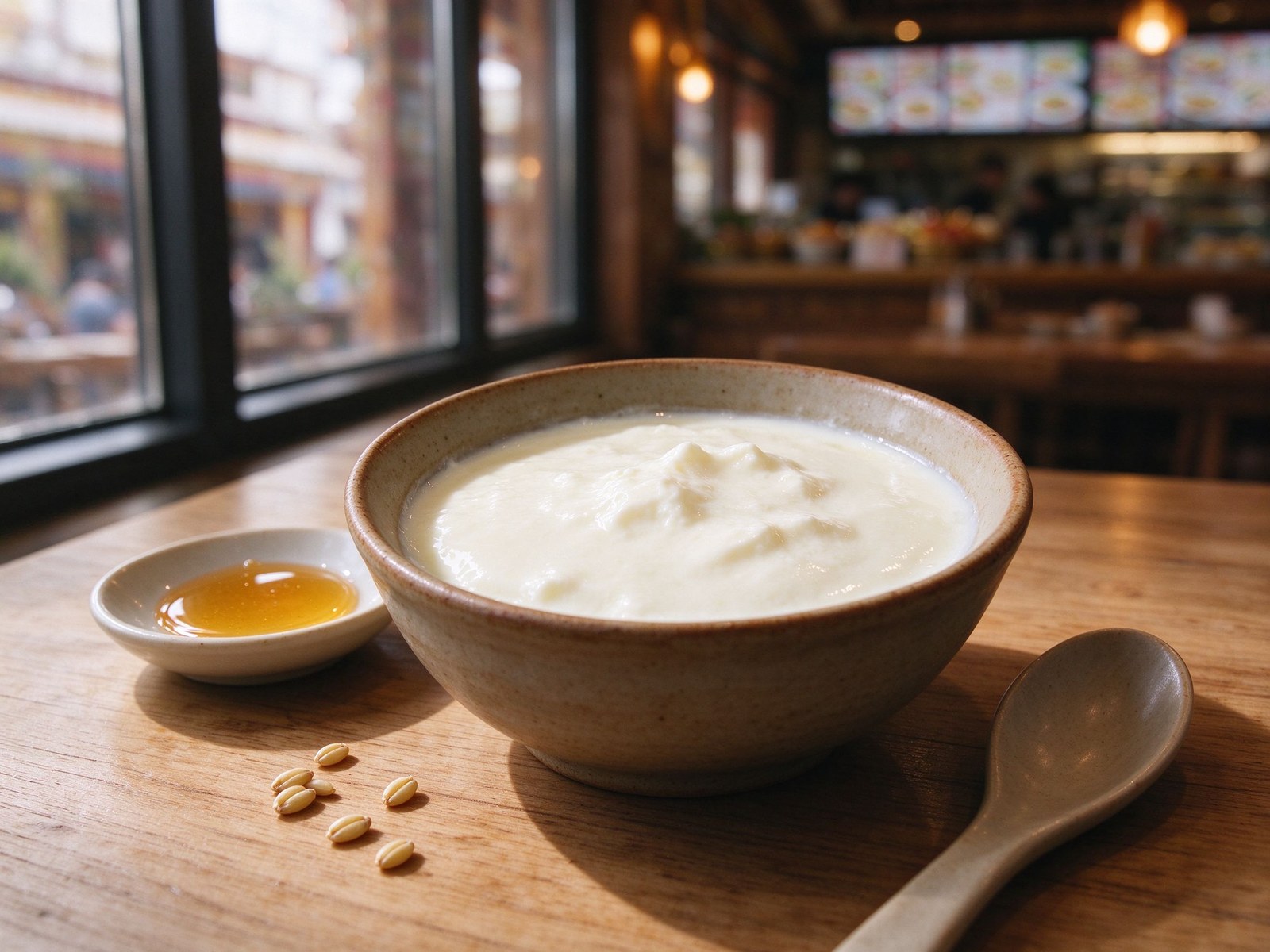
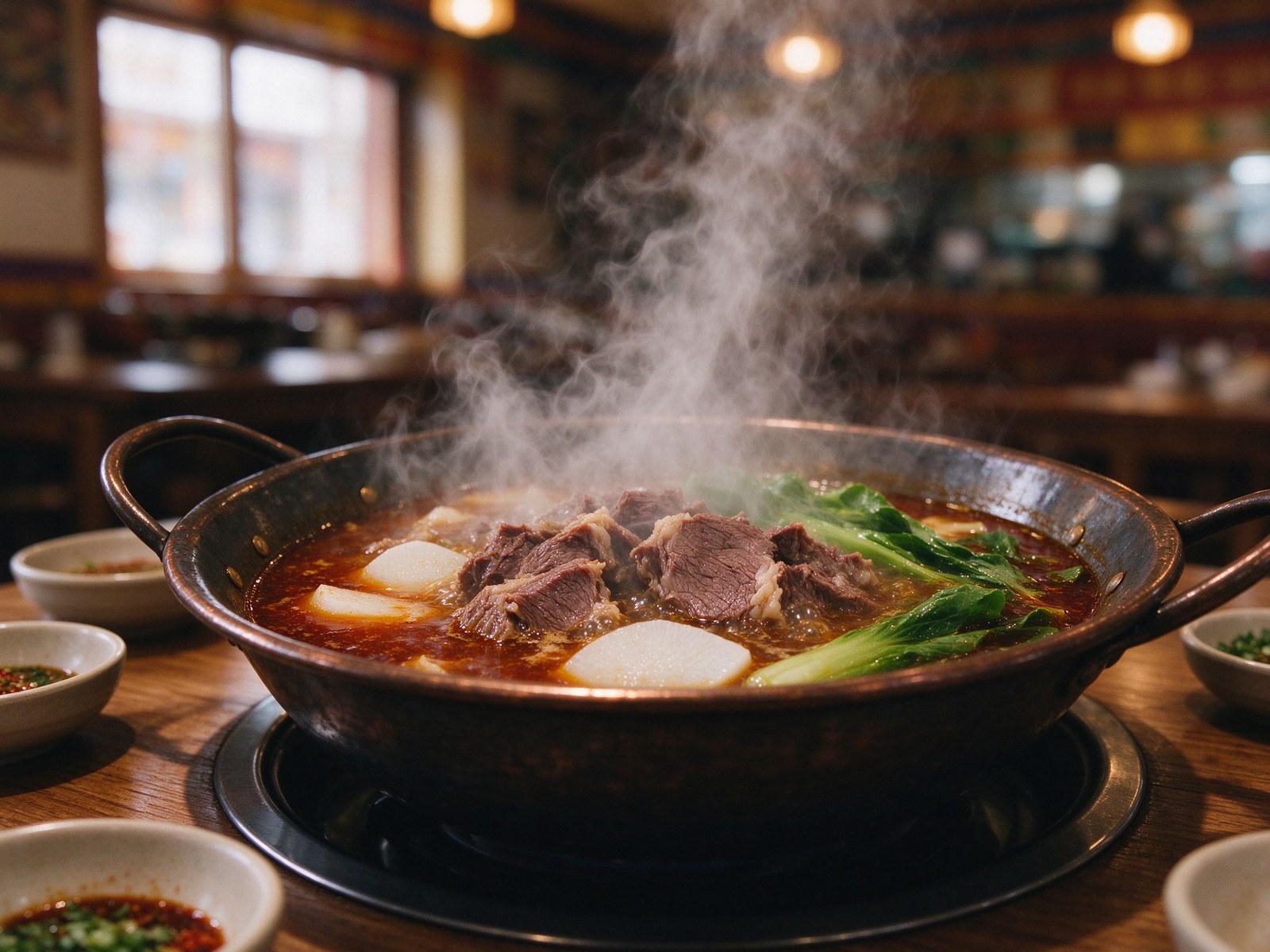
Eat Tibetan where Zhangzha Town locals eat: yak-butter hot pot, hand-grabbed yak meat, monk buns (heshang baozi), yak yogurt and highland barley cakes—found along Bianbian Street by the Baishui River. Buy sealed yak jerky and small jars of yak yogurt you will actually finish; skip the wrapped 'Jiuzhaigou specialties' gift boxes at the entrance coach drop-off, where the markup is steepest.
Best time: Late September to early November for autumn color and clear water; April–June for green and lighter crowds. Winter (off-season) is quiet and cheaper with some high spots like the primeval forest closed, and the road to Huanglong can ice. · High-altitude temperate monsoon—cool summer, cold winter, strong day-night and on/off-valley swings. Fog and rain roll in by afternoon; carry a shell and warm layers even in summer.
Inside Jiuzhaigou the paid eco-bus (included in the ¥90/¥80 vehicle ticket) is the only motorized transport—ride it up the Y, walk the boardwalks down. There is no road loop you can drive yourself; all visitors stay outside the gate in Zhangzha Town. Between Jiuzhaigou and Huanglong (~2.5 h by road) use a transfer bus, taxi or organized day trip. Jiuzhai Huanglong Airport (JZH) is ~88 km from the valley mouth—airport bus to Zhangzha Town runs around flights (~¥45, reference). The Huanglong-Jiuzhai HSR station (Chengdu–Qinghai railway) connects with through buses to the mouth. Chengdu is the usual rail/flight hub; plan a full travel day to reach the valley, not a same-day city stop.
The valley runs real-name timed entry with a daily cap of 41,000. Book via the '九寨沟旅游官方平台' or '阿坝旅游' WeChat mini-program; entry stops at 14:00 and the park closes 18:00. When a date sells out, an official waitlist (候补票) opens—register your passport number and pay to queue.
Carry the passport/ID you booked with—entry is checked against it. Foreign visitors enter their passport number in the mini-program. There is no on-site ticket window at Huanglong either; buy online the day before by 18:00.
The valley sits ~2,000–3,100 m and Huanglong ~3,100–3,500 m—walk slowly, skip intense exercise. Fog and rain roll in fast; carry a rain shell, layers and non-slip shoes on the boardwalks. Huanglong has free oxygen bars along the route if you feel faint.
Follow the boardwalks: no wading or swimming, no feeding wildlife, no drones, no pets, no smoking or open fire (it is a fire-prevention zone). No lodging inside—everyone exits by 18:00. Stay in Zhangzha Town outside the gate.
Tickets and Huanglong are bought in the official WeChat mini-programs; chain hotels in Zhangzha take Alipay/WeChat with bound foreign cards. Keep ¥200–400 cash for Bianbian Street stalls, yak yogurt and the airport bus. Show Chinese addresses (九寨沟沟口/漳扎镇) to drivers.
Jiuzhai Huanglong Airport (JZH) is ~88 km from the mouth; airport buses run to Zhangzha Town ~¥45 (scheduled around flights). The Huanglong-Jiuzhai HSR station on the Chengdu-Qinghai railway has through buses to the valley. Bus fares and stops move with flights and seasons—confirm on arrival.
Inside Jiuzhaigou the paid eco-bus (included in the ¥90/¥80 vehicle ticket) is the only motorized transport—ride it up the Y, walk the boardwalks down.
There is no road loop you can drive yourself; all visitors stay outside the gate in Zhangzha Town.
Metro, stalls, and rides mostly take Alipay or WeChat. Set up Alipay with a foreign card before you land.
Show the Chinese name “九寨沟” to drivers and staff. It beats a long English explanation.
Book tickets, transfers, and popular tours via partners first — then request deeper local experiences through ChinaPie.
Disclosure: Some links are affiliate links. ChinaPie may earn a commission on eligible bookings at no extra cost to you.
Prices shown are planning references only. Actual rates fluctuate with season, holidays, demand, and partner promotions — the price at checkout on the booking site is authoritative.
Conversion stays soft — clear next steps: plan this city, or request planning help.
Yes for typical tourist areas. Keep phones and bags secure on metro and in crowded night spots; use licensed taxis or Didi.
Depends on your passport. Check ChinaPie Plan & Prep → Visa for 30-day visa-free and 240-hour transit options before booking.
Yes—foreigners can set up Alipay with passport + international card. See /prep/alipay-setup for the step-by-step guide.
Yes—real-name timed entry is required with a daily cap of 41,000. Book via the '九寨沟旅游官方平台' or '阿坝旅游' WeChat mini-program, ideally several days ahead in autumn and holidays. If a date shows sold out, use the official waitlist (候补票) by entering your passport details and paying; entry stops at 14:00.
Jiuzhaigou is alpine lakes and waterfalls reached by an eco-bus loop; Huanglong (in Songpan County, ~2.5 h away) is a ridge of ~3,400 golden travertine pools ending at the Five-Colored Pool. With 2–3 days, do both: Jiuzhaigou takes one full day, Huanglong a cable-car-up, walk-down half-day. Huanglong is higher (3,100–3,500 m), so pace for altitude.
Most visitors fly to Jiuzhai Huanglong Airport (JZH), ~88 km from the mouth, then take the airport bus (~¥45, scheduled around flights) to Zhangzha Town. The newer Huanglong-Jiuzhai HSR station on the Chengdu–Qinghai railway also connects with through buses to the valley. Treat the transfer as a half-day; confirm the latest bus schedule on arrival.
Late September to early November is the peak foliage window, with the clearest turquoise water. It is also the busiest period—book timed entry well ahead and expect the daily cap. April–June is greener and quieter; winter is cheap and misty, but some high spots like the primeval forest close.
China offers unilateral visa-free entry to 40+ countries including France, Germany, UK, Japan, South Korea, Singapore, Malaysia, Thailand, Italy, Spain, Netherlands, Switzerland, Sweden, Norway, Denmark, Finland, Belgium, Austria, Ireland, Portugal, Greece, and more. Stay: up to 30 days. IMPORTANT: US passport holders are NOT on the unilateral visa-free list and need a visa. Check latest list at China Immigration official site before travel.
Most first-timers do well with 1–3 days. Start with the 1-day core valley: first bus up, boardwalk down, then expand to 2–3 days if you want slower food and culture. Use Plan this city to turn stops into a workable week.
Foreign cards work more often via Alipay / WeChat Pay tourist modes and some metro apps, but coverage still varies by merchant. Keep a small cash float and set payment apps up before peak sightseeing. See the practical section on this hub for city-specific notes.