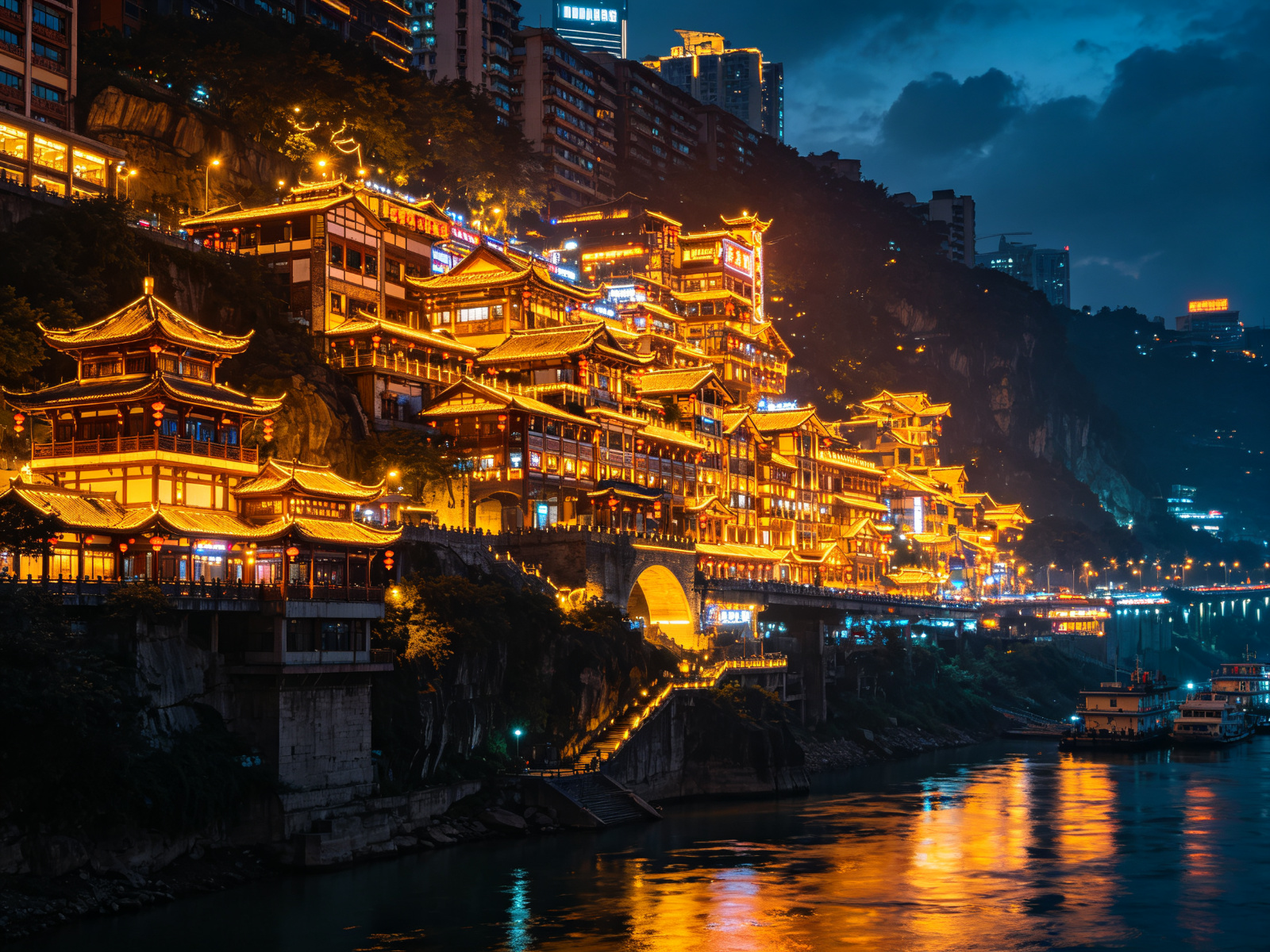
Guilin Visual Travel Guide
Illustrated city overview — not a scale map. Use Routes below for day-by-day stops you can open in Planner.

Guilin · 桂林
Guilin is one moving corridor, not a list of sights: the Li River runs from the city (caves, rice noodles) down to Yangshuo (cycling, bamboo rafts), and Longji's terraces hang off to the northwest as a separate minority-culture day.
City-level visual guides and reviewed photos — infographics are illustrated overviews, not scale maps.
Illustrated city overview — not a scale map. Use Routes below for day-by-day stops you can open in Planner.
The classic cruise goes Guilin to Yangshuo, 4–5 hours one way through karst peaks — book it as transport to where you want to sleep, not as a round trip. Sit on the right going downriver and start at the pier, not the deck crowd.
West Street is the night anchor; the daytime point is cycling the Yulong River valley between bamboo rafts. Stay 1–2 nights here rather than commuting back to Guilin each evening.
The 650-year terraces are a separate half-day-plus drive northwest. They read as water-filled silver in May and golden in October — check the season before you commit the day.
The city’s signature line — depth entry, not a checklist.
Do the big boat Guilin→Yangshuo on day one for the wide karst panorama; on day two trade engines for a man-pulled bamboo raft on the quieter Yulong tributary. The contrast — motorized panorama vs. intimate current — is the city's signature. Book the cruise via the official '漓江售票处' WeChat service account, and the raft via ysylh.cn; both are real-name.
Add to trip to compare and prepare; check partner links for slots and price when shown.
Beyond ticket notes — read the city’s character first.
The centuries-old line is not marketing. The Xingping bend of the Li River is the backdrop on the back of the 20-yuan note — ask the boat guide for the exact viewpoint and match it to your bill.
The peaks are limestone carved by water; Reed Flute Cave is the same geology exposed underground. Read the cave as the inside of the mountain you are photographing from the boat.
The terraces were built ~650 years ago by Zhuang and Yao communities climbing the slope. Ping'an and Jinkeng are living villages, not open-air sets — eat where village families eat.
Yangshuo's old street drew foreign backpackers from the 1980s onward; the mix of small-town Chinese and foreign cafe culture is the reason it feels different from other Chinese old towns.
Shanshui painting's isolated vertical peaks did not come from imagination — this is the reference. On the boat, notice how painters simplified the same peaks you see; the viewpoint is the art.
Tickets, duration, transport — ready for your trip cart.
Popular4–5 hour cruise from Guilin to Yangshuo through karst peaks. The classic '20 yuan bill' scenery. One of China's top e…
 Popular
Small town at the end of the Li River cruise. West Street is pedestrian-only with bars, cafes, and shops. Great base…
 Popular
Spectacular rice terraces built 650 years ago by Zhuang and Yao minorities. Best in May (water-filled) and October (g…
 Popular
Limestone cave with multicolored lighting illuminating stalactites and stalagmites. Called 'Nature's Art Palace.'
 Popular
Quieter alternative to Li River. Man-powered bamboo rafts through karst scenery. More intimate and peaceful.
Executable skeletons: day-by-day anchors you can trim to fit.
1-day
For transits with one day and no Yangshuo night. Keeps everything in the city.
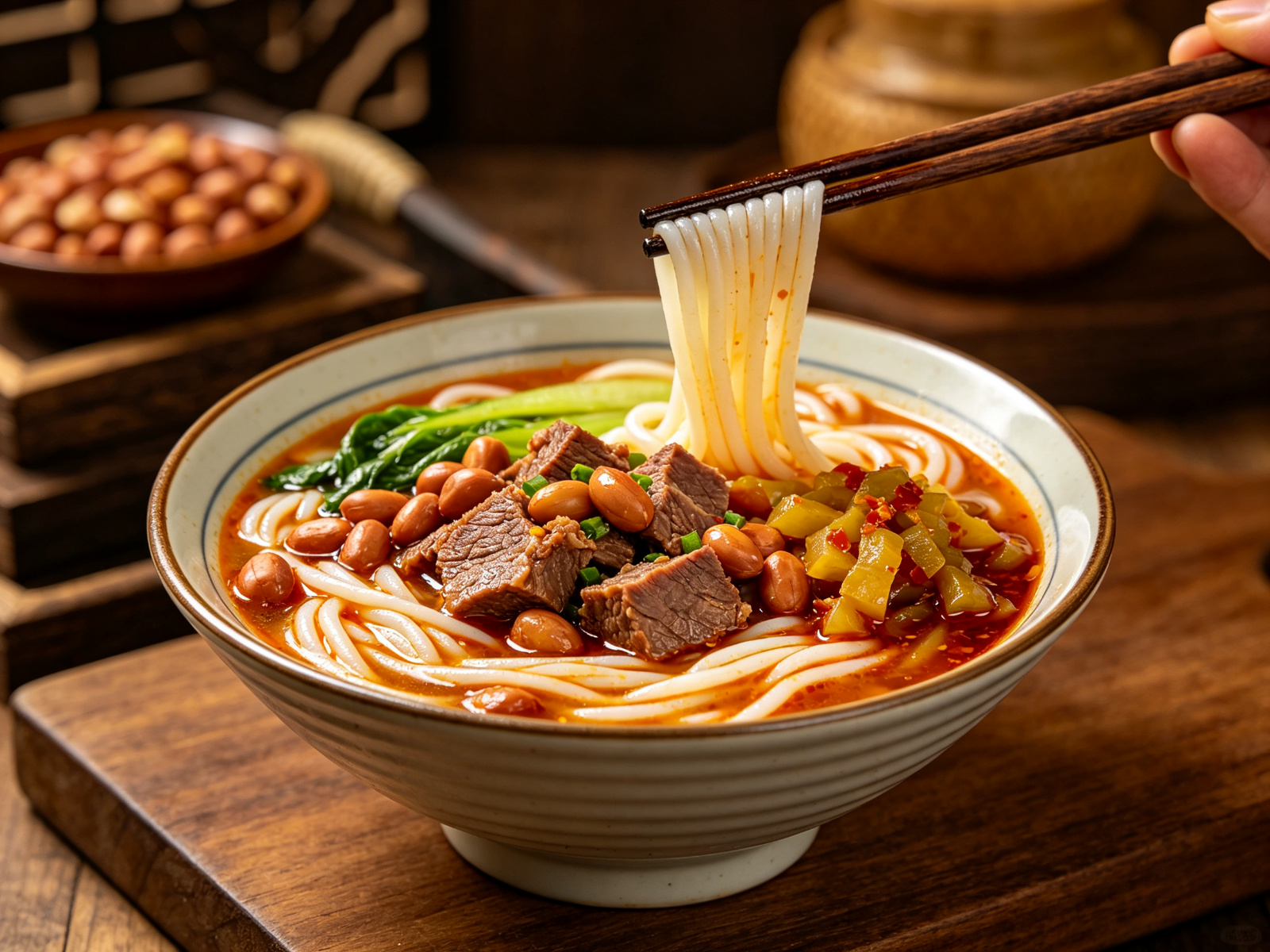
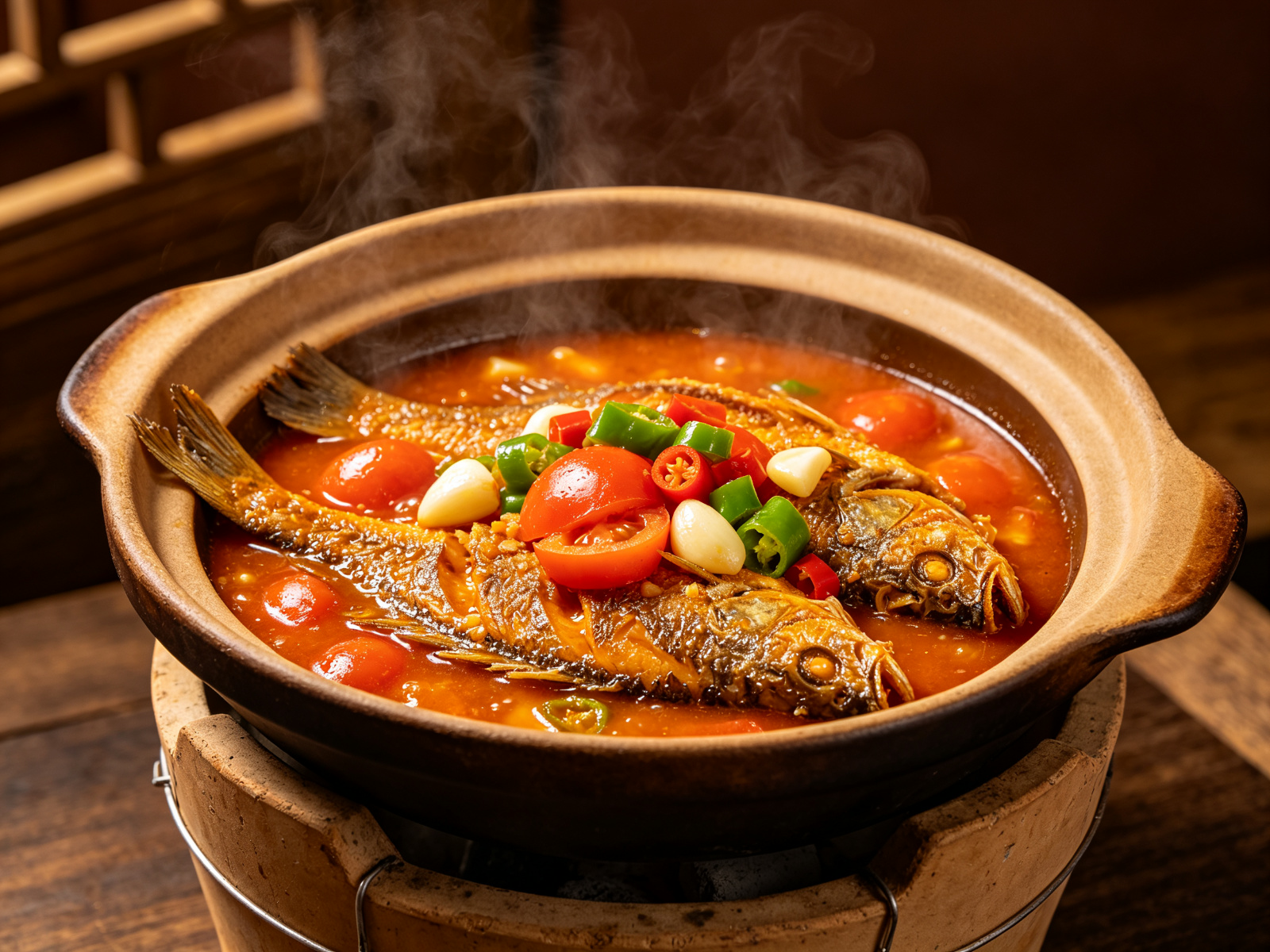
Eat like a local on breakfast noodles and riverside beer fish, not the West Street neon set. Guilin rice noodles are a working breakfast (horse or beef broth, peanuts, chili); Yangshuo beer fish is ordered by the jin at a riverside table, weighed in front of you. Skip overpackaged 'Guilin souvenir boxes' — take small sealed things locals actually cook with.
 Popular
Rice noodles in savory broth with horse meat (traditional) or beef, peanuts, and chili. Breakfast staple.
 Popular
Fresh river fish cooked with beer, tomatoes, and peppers. Yangshuo specialty. Best at riverside restaurants.
 Popular
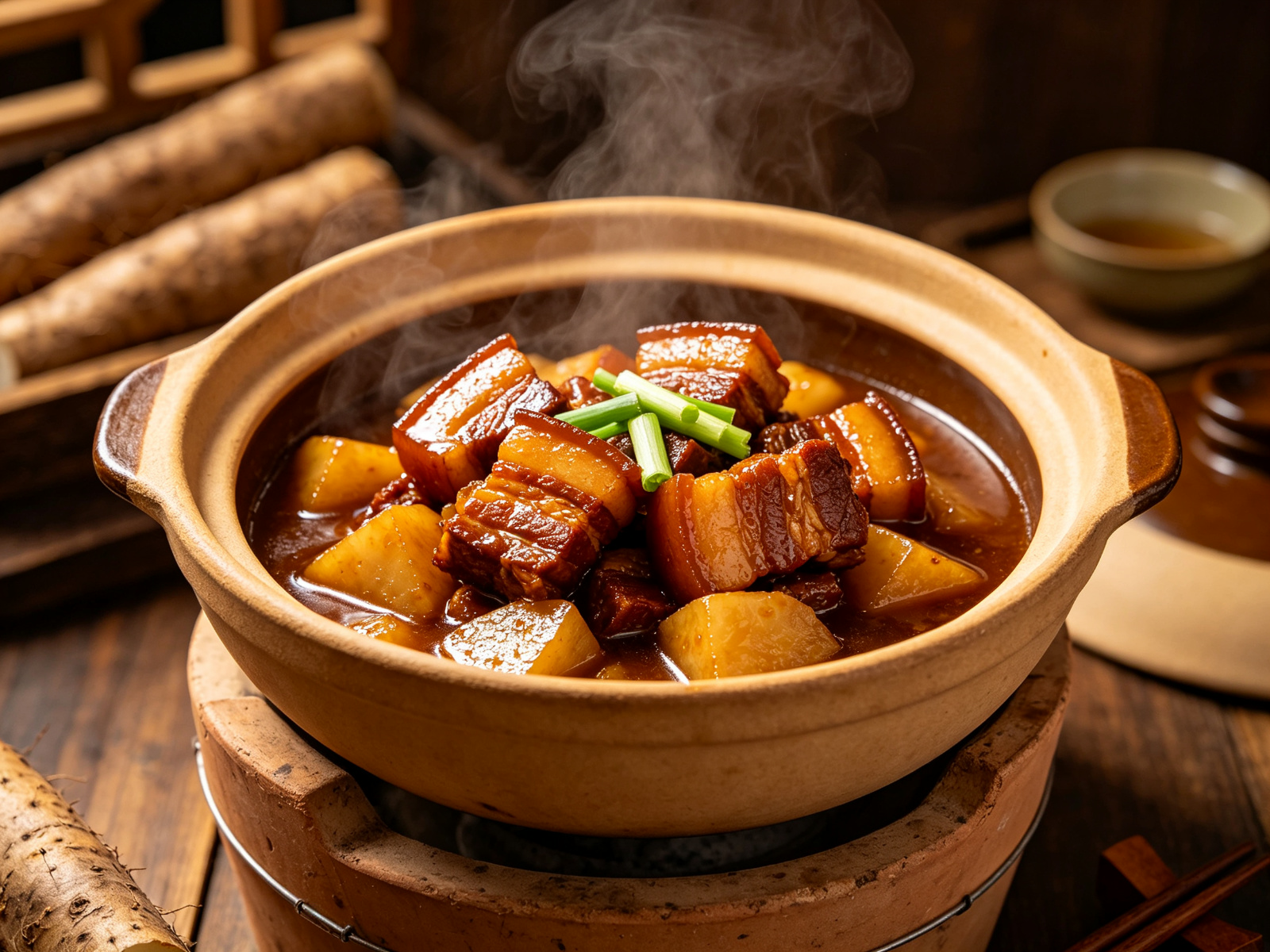
Sliced pork belly layered with taro, steamed until tender. Rich and savory. Guangxi specialty.
 Popular
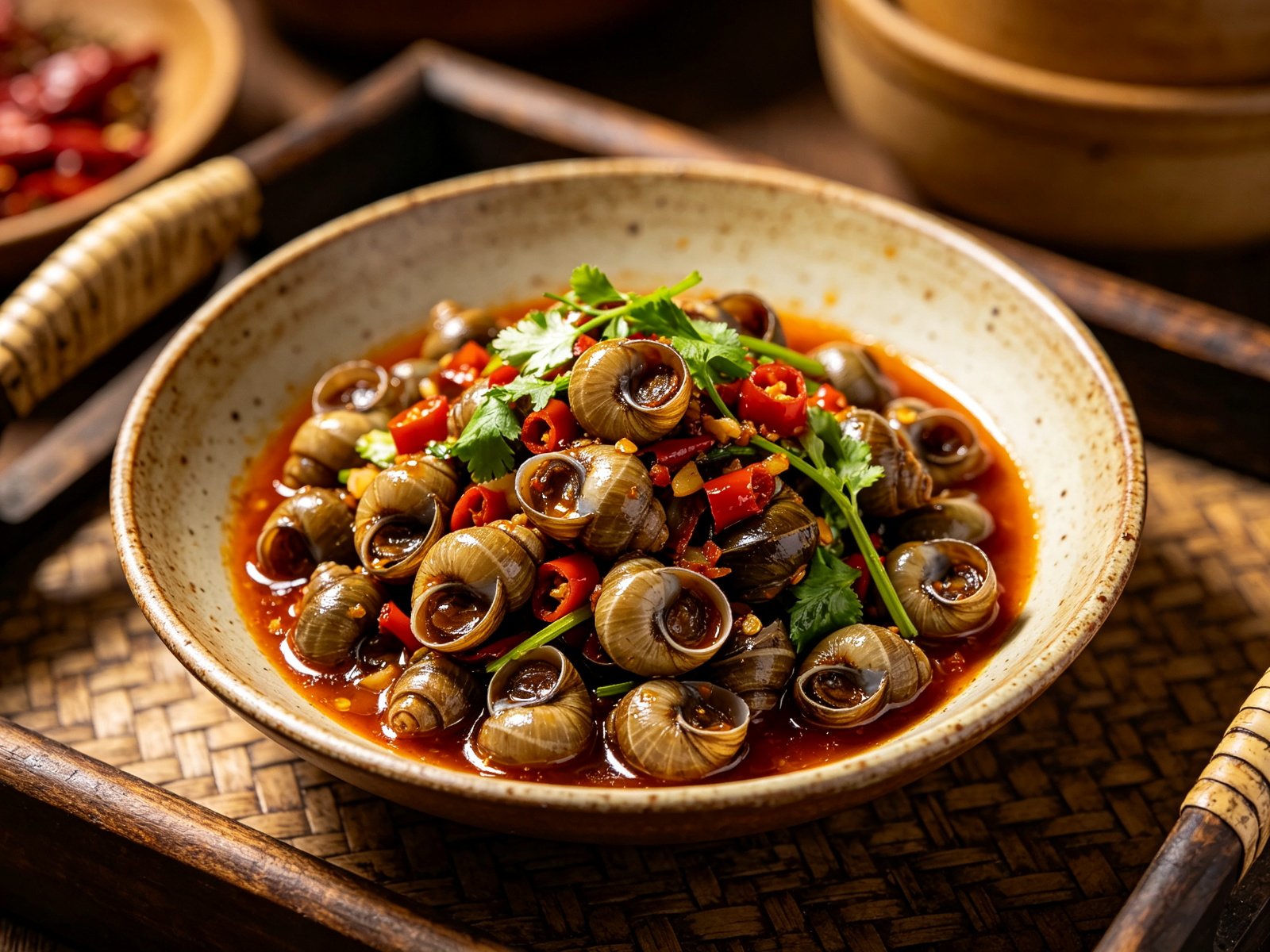
Spicy stir-fried river snails with basil and chili. A bar snack favorite in Yangshuo.
Best time: April–October (terraces best May–Jun, Sep–Oct) · Subtropical — humid, frequent rain
Li River cruise connects Guilin→Yangshuo. Buses between cities. Bike rental in Yangshuo. Didi for local trips. Longji via tour bus.
Alipay/WeChat with a linked foreign card works at ticket gates and chain restaurants; keep ¥100–200 cash for small noodle shops and a raftsman tip. The Li River cruise and Yulong raft are real-name — bring the physical passport used for booking.
The Li River cruise and Yulong rafts sell out on holidays; reserve 1–2 days ahead via the official '漓江售票处' service account and ysylh.cn. Longji day buses also book up — lock transport before the terrace-season weekend.
No flash in caves; do not stand or rock the bamboo raft; photograph Zhuang/Yao villagers in Longji only after asking. West Street is loud at night — that is the point, but keep it respectful in the side lanes.
April–June is wet and misty (good for photos, bad for visibility); heavy rain can suspend cruises and rafts — check the scenic area's same-day notice. Bring rain gear; Longji mountain villages are cooler than Guilin city.
Airport bus runs ¥30 to the city and train stations (~60–85 min). Yangshuo is ~1.5h by bus from Guilin. Inside Yangshuo, rent a bike (~¥20/day); use Didi for short hops. Longji needs a ~2.5h transfer.
Hotels and West Street cafes have solid Wi-Fi; get an eSIM on arrival for continuous data. Google and similar services are restricted without a pre-arranged roaming solution — sort it before landing.
Li River cruise connects Guilin→Yangshuo.
Buses between cities.
Metro, stalls, and rides mostly take Alipay or WeChat. Set up Alipay with a foreign card before you land.
Show the Chinese name “桂林” to drivers and staff. It beats a long English explanation.
Book tickets, transfers, and popular tours via partners first — then request deeper local experiences through ChinaPie.
Disclosure: Some links are affiliate links. ChinaPie may earn a commission on eligible bookings at no extra cost to you.
Prices shown are planning references only. Actual rates fluctuate with season, holidays, demand, and partner promotions — the price at checkout on the booking site is authoritative.
Conversion stays soft — clear next steps: plan this city, or request planning help.
Yes for typical tourist areas. Keep phones and bags secure on metro and in crowded night spots; use licensed taxis or Didi.
Depends on your passport. Check ChinaPie Plan & Prep → Visa for 30-day visa-free and 240-hour transit options before booking.
Yes—foreigners can set up Alipay with passport + international card. See /prep/alipay-setup for the step-by-step guide.
Stay 1 night in Guilin (for airport/train access and Reed Flute Cave), then 1–2 nights in Yangshuo (for scenery, cycling, and bamboo rafts). Yangshuo is where the real beauty is.
China offers unilateral visa-free entry to 40+ countries including France, Germany, UK, Japan, South Korea, Singapore, Malaysia, Thailand, Italy, Spain, Netherlands, Switzerland, Sweden, Norway, Denmark, Finland, Belgium, Austria, Ireland, Portugal, Greece, and more. Stay: up to 30 days. IMPORTANT: US passport holders are NOT on the unilateral visa-free list and need a visa. Check latest list at China Immigration official site before travel.
Yes. US passport holders need a visa to enter mainland China. The 10-year multiple-entry tourist visa (L visa) is common: $185 fee, processing 3-5 business days. You can also use the 240-hour transit visa-free if transiting to a third country. Apply at Chinese embassy/consulate or via authorized visa agencies. Many travel blogs incorrectly say US is visa-free — this is false.
Major hotels, international restaurants, and large malls accept Visa/Mastercard. But most small shops, street food, taxis, and local experiences only accept Alipay or WeChat Pay. Link your foreign card to Alipay (Tour Card) for daily use. Carry some cash (¥500-1000) as backup.
China is consistently ranked among the safest countries for tourists. Violent crime against foreigners is extremely rare. Common issues: pickpocketing in crowded areas (train stations, metro), taxi scams at airports, and fake goods at markets. Normal precautions apply: keep valuables secure, use licensed taxis/Didi, don't accept unsolicited tours. Women traveling solo generally feel very safe even at night.
Most first-timers do well with 1–3 days. Start with the 1-day Guilin city core: caves, park, river-night walk, then expand to 2–3 days if you want slower food and culture. Use Plan this city to turn stops into a workable week.
Foreign cards work more often via Alipay / WeChat Pay tourist modes and some metro apps, but coverage still varies by merchant. Keep a small cash float and set payment apps up before peak sightseeing. See the practical section on this hub for city-specific notes.