Xi'an Visual Travel Guide
Illustrated city overview — not a scale map. Use Routes below for day-by-day stops you can open in Planner.
Xi'an · 西安
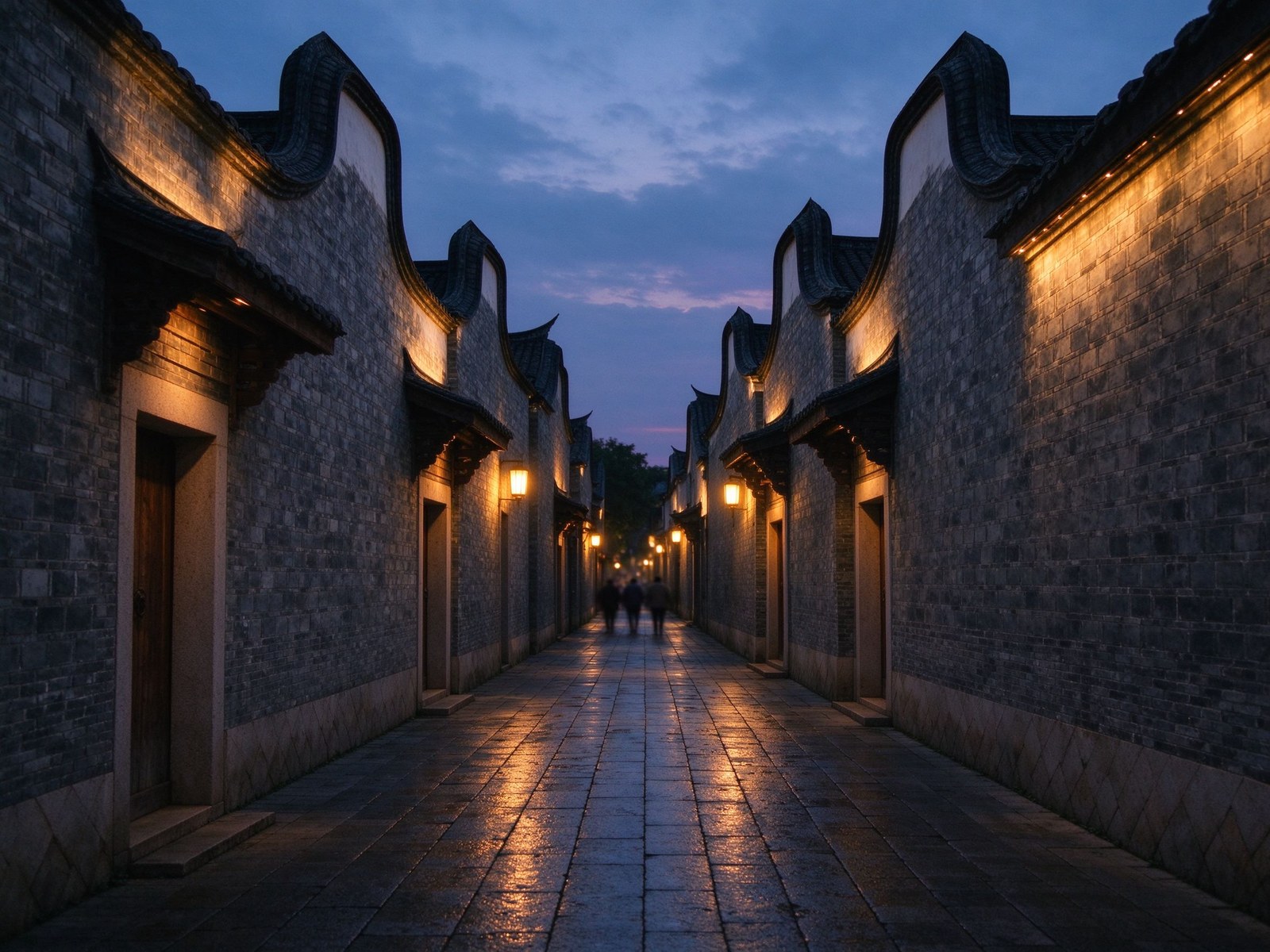
Xi'an is two layers at once: the imperial capitals buried beneath the modern city (Qin, Han, Tang), and a living Tang-culture street life built on top of them — museums by day, wall rides and Muslim-quarter food by night.
City-level visual guides and reviewed photos — infographics are illustrated overviews, not scale maps.
Illustrated city overview — not a scale map. Use Routes below for day-by-day stops you can open in Planner.
Qin terracotta army east of the city, Han ruins west, Tang palace and pagoda south — the layers are stacked, not scattered. Pick two dynasties per day and visit the museums in chronological order; skip the live-reenactment shows and read the artifacts.
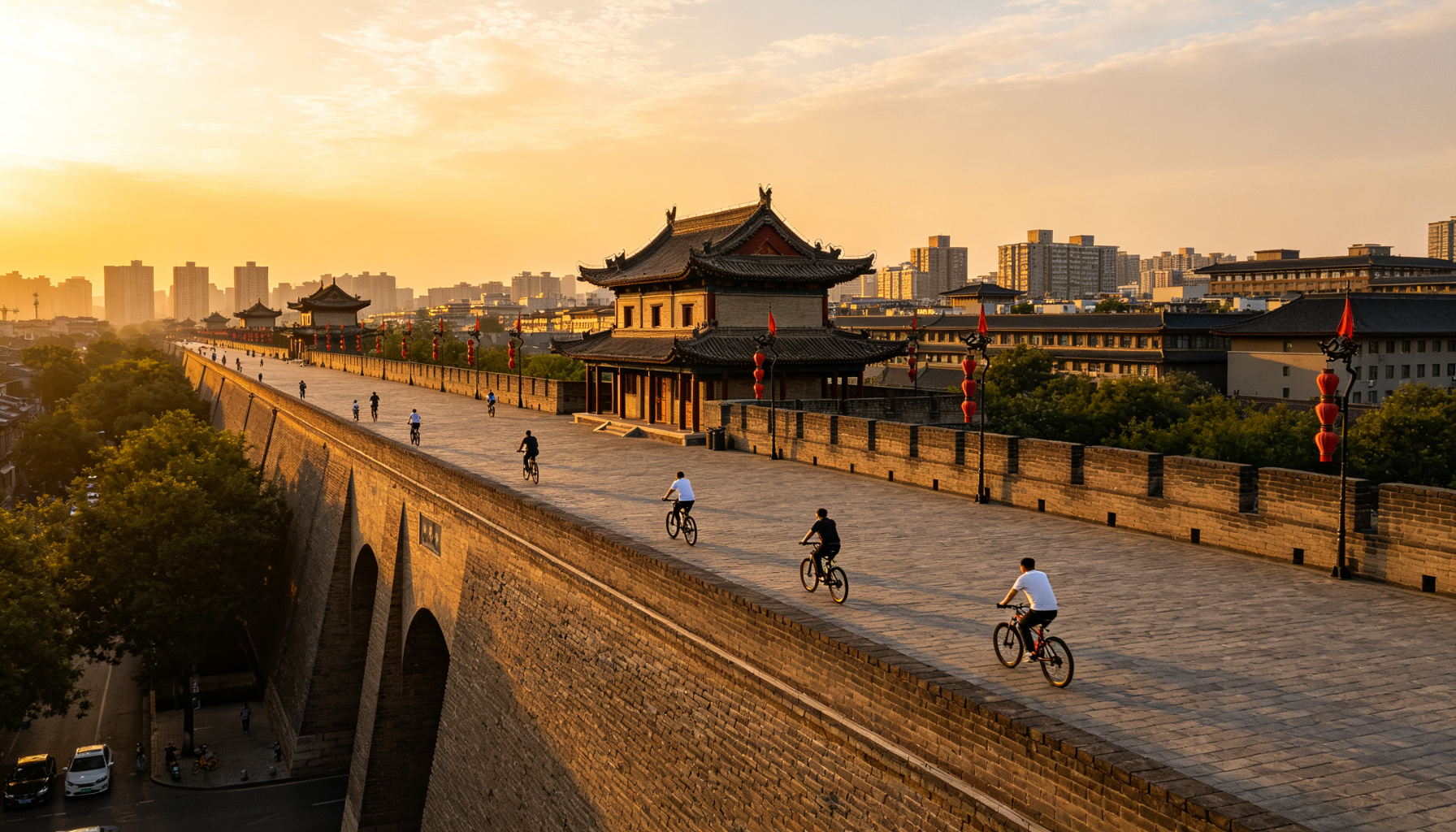
The 13.74 km Ming wall loops the whole old city; rent a bike at a gate tower and ride at sunset rather than posing on the ramparts for ten minutes. Notice how the modern city grid hugs the wall — that edge is the best free walking map of old Xi'an.
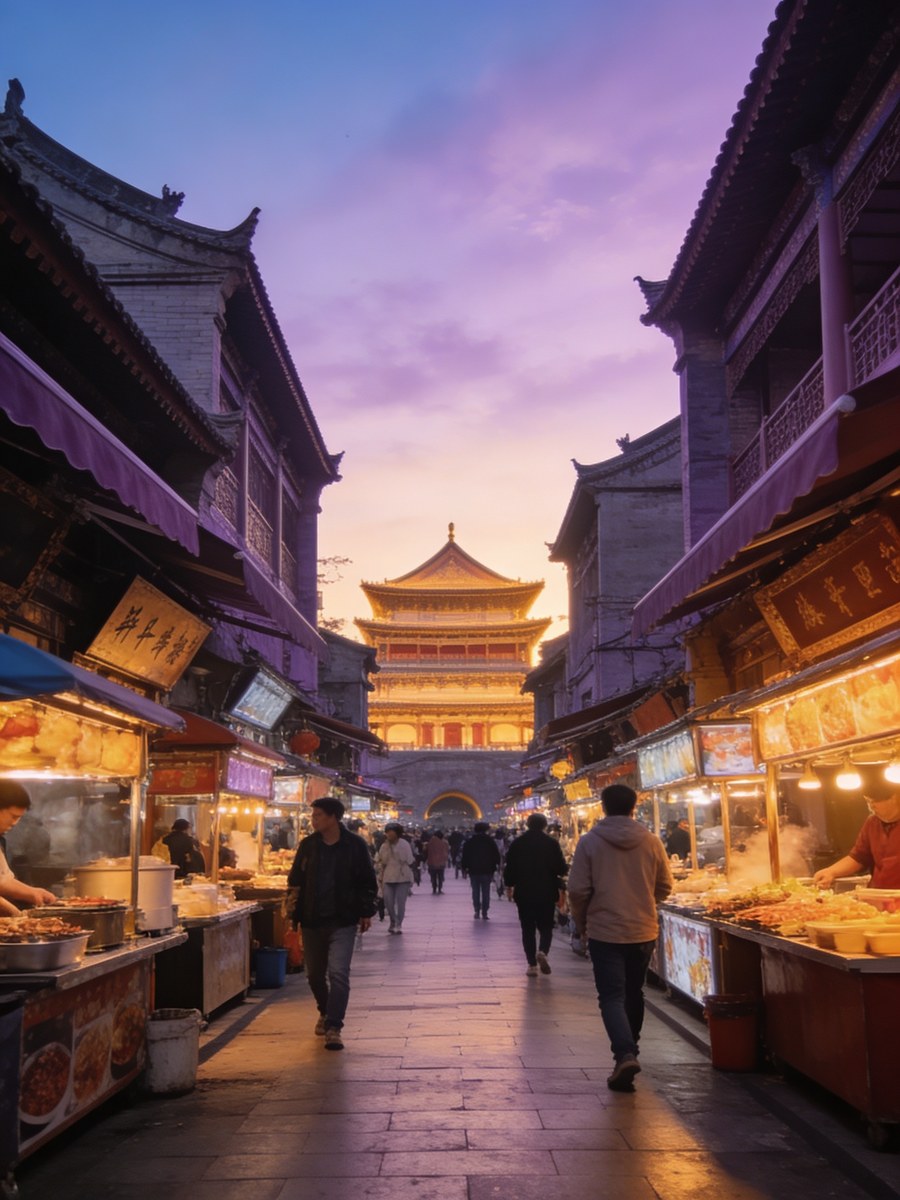
Behind the snack street sits a real Hui neighborhood with a centuries-old mosque. Eat the skewers and persimmon cakes, then walk one lane deeper off the main street — that is where local Hui families actually shop and eat.
The city’s signature line — depth entry, not a checklist.
Both sit 40 km east in Lintong on the same road. Do Huaqing Palace in the morning (Tang hot-spring retreat, Chiang Kai-shek's 1936 lodge), then the Terracotta Army in the afternoon. The museum ticket also covers Lishan Yuan archaeological park — take the free shuttle, it holds the bronze chariots. Book the museum days ahead on its official site; no third-party platform is authorized.
Add to trip to compare and prepare; check partner links for slots and price when shown.

The hanfu photoshoot people book in Xi'an. Studio or street, deposit clear.
 Popular
Roujiamo, yangrou paomo, and the best stalls — with prices.

Trending food experience in Xi'an.
Beyond ticket notes — read the city’s character first.
Xi'an was Chang'an, the eastern capital of the Silk Road and seat of Zhou, Qin, Han, Sui and Tang power. The modern street grid sits directly on the Tang city foundations — when you walk the wall, you are walking the Ming wall over a Tang memory.
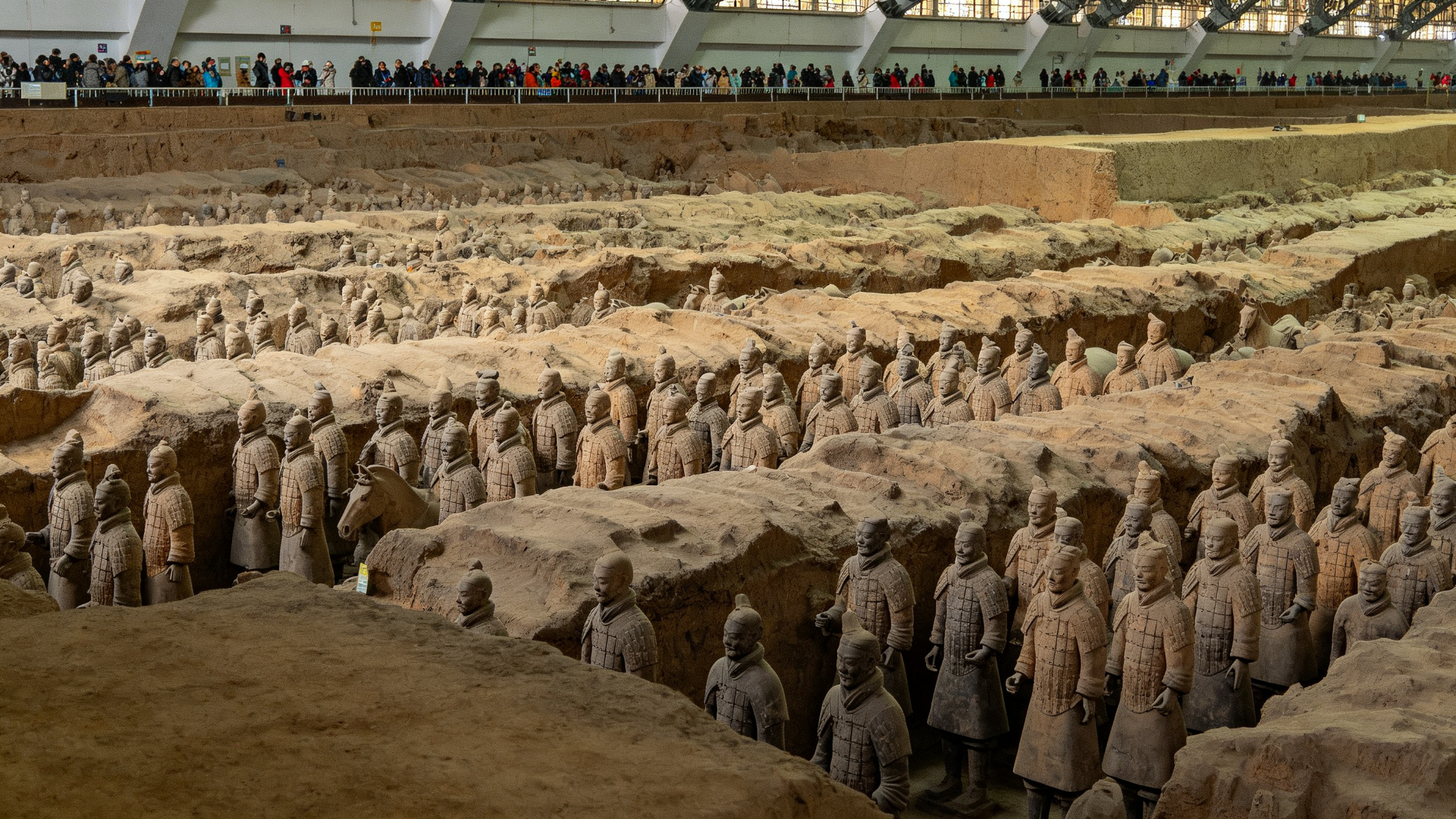
Most of the mausoleum complex remains unexcavated. Pit 1's ranks are partially restored, the rest still in soil. The point of the visit is how archaeology is done here slowly, in situ — read the excavation sequence before posing for photos.
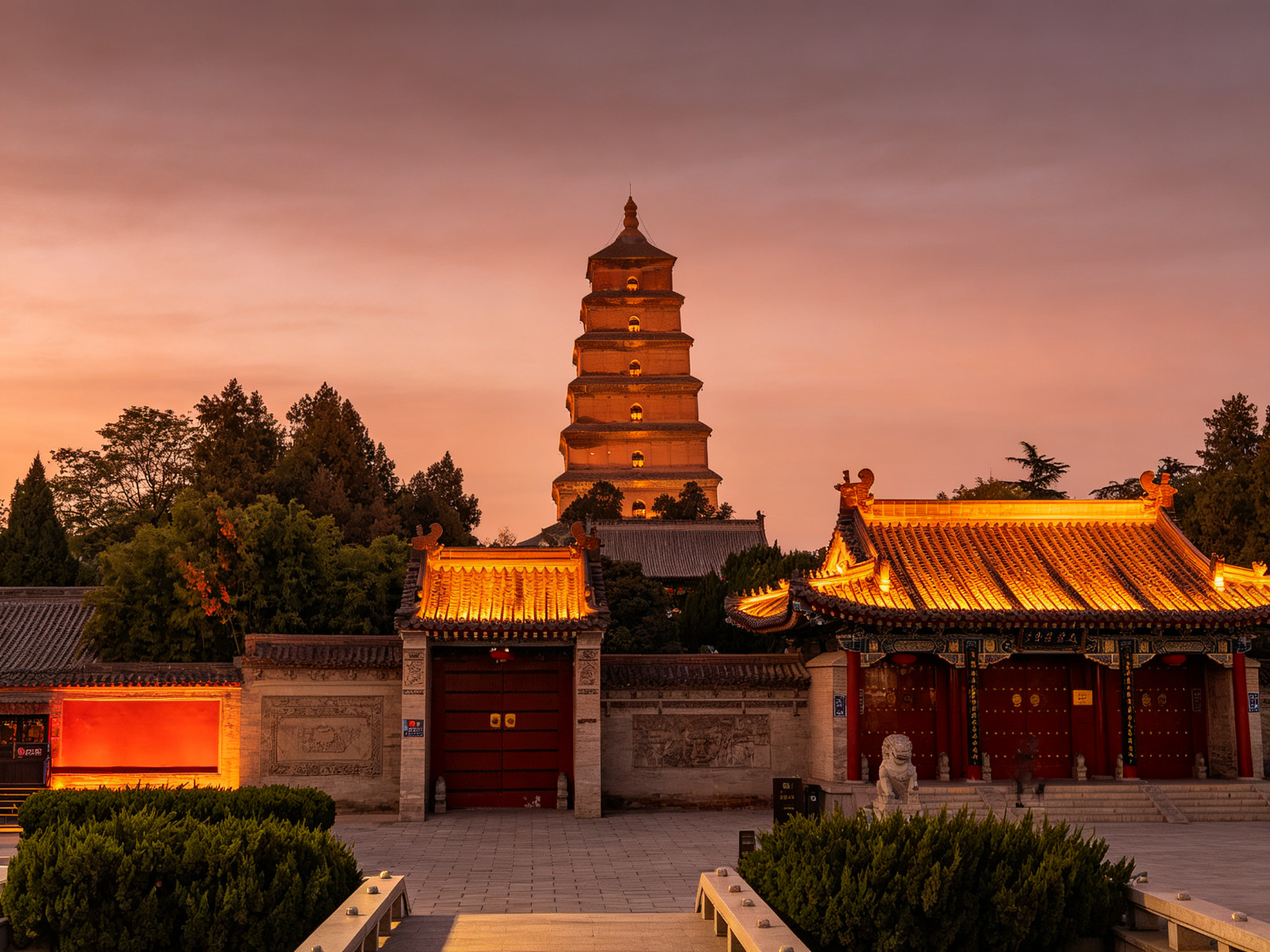
The Giant Wild Goose Pagoda was built in 652 to house the scriptures Xuanzang brought back from India; in 2014 it became part of the UNESCO Silk Roads: Chang'an-Tianshan Corridor. It is a working pilgrimage site, not a film set.
The Great Mosque dates to 742; the surrounding lanes have fed Silk Road traders for centuries. Roujiamo and yangrou paomo are not invented snacks — they are how resident Hui families still eat. Watch where locals queue; that is the quality filter.
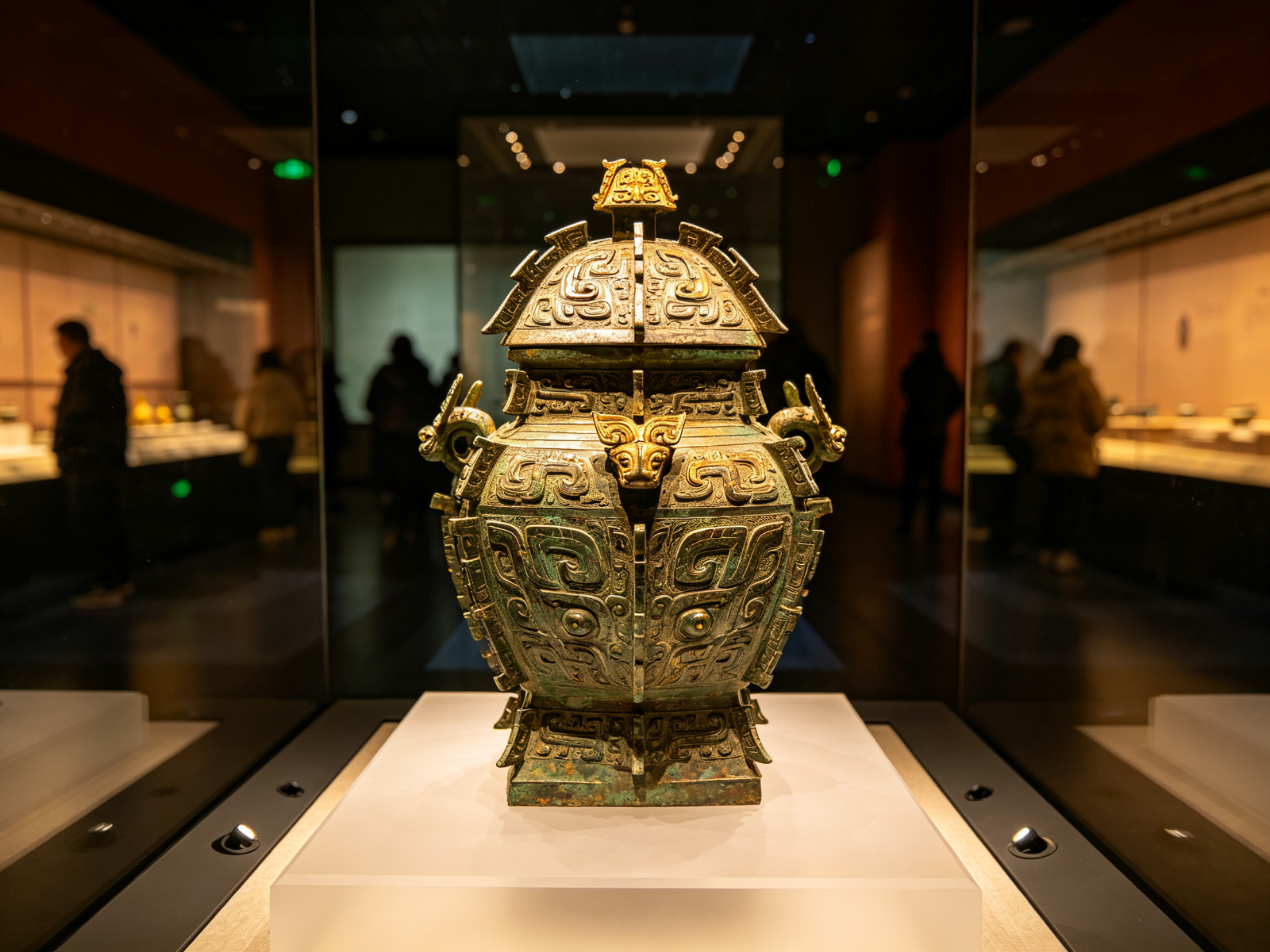
Hanfu rentals and Tang-themed night streets are a deliberate modern revival. Enjoy them — but read them as a contemporary industry around the heritage, not as the Tang dynasty itself. The artifacts in Shaanxi History Museum are the actual layer.
Tickets, duration, transport — ready for your trip cart.
8,000+ clay soldiers guarding Qin Shi Huang's tomb. 20th century's greatest archaeological find.
 Popular
Best-preserved ancient wall in China, 14km. Bike the loop at sunset.
300+ year night food street. Skewers, roujiamo, persimmon cakes.
 Popular
7th-century pagoda for Xuanzang's scriptures. Nightly fountain show at 20:00.
 Popular
One of China's best museums, 370,000 artifacts from 13 dynasties. Free with reservation.
 Popular
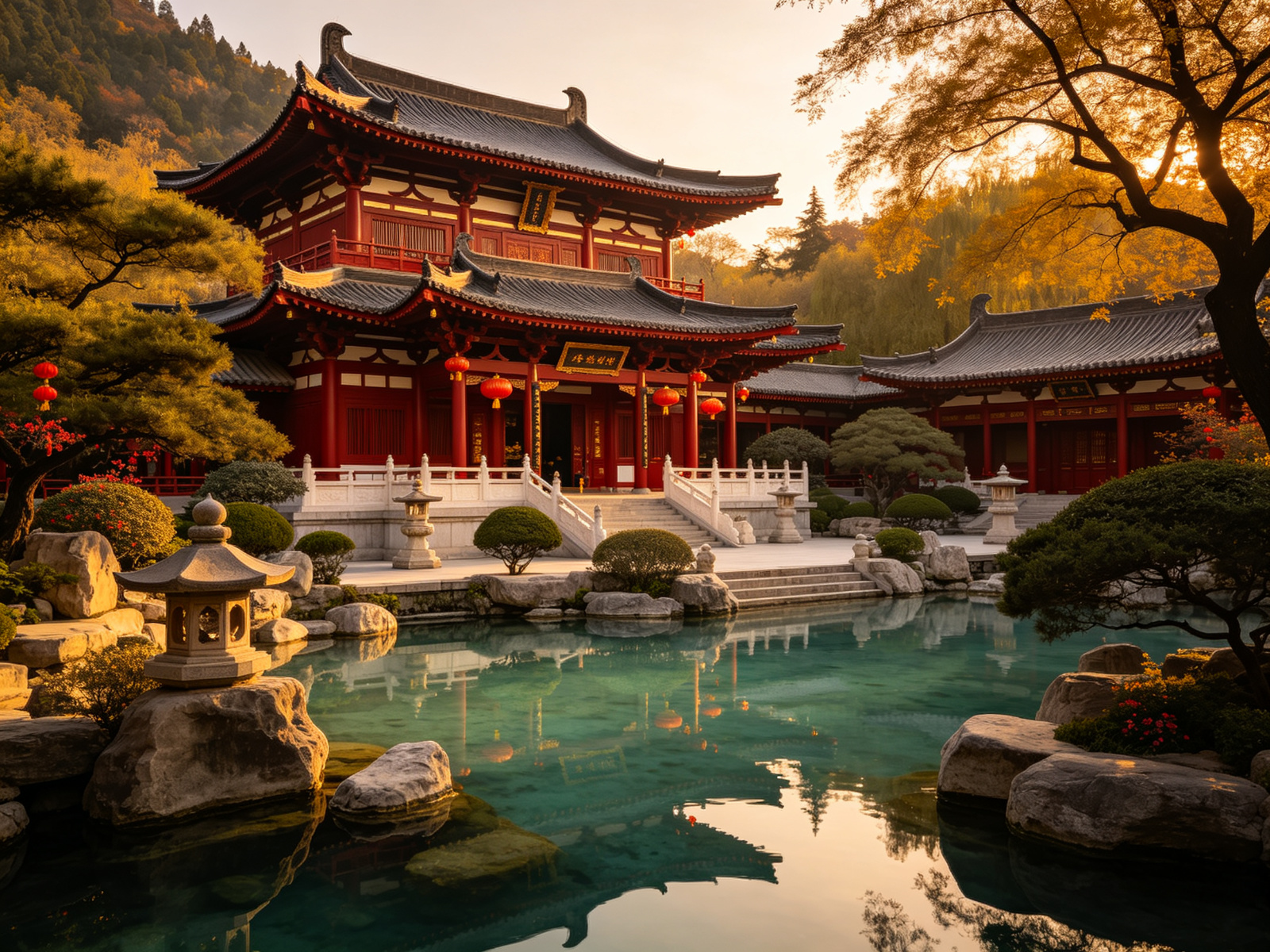
Tang imperial hot spring retreat, famous for Yang Guifei. Combine with Terracotta Warriors.
Executable skeletons: day-by-day anchors you can trim to fit.
1-day
For one-day transits who want the essential Xi'an feel without a Lintong day trip.
Xi'an eating is working-class Northwestern Muslim food: heavy bread, lamb, chili oil, wheat noodles. Eat it on the street or at old hall restaurants; skip 'heritage snack set' stalls aimed at tour groups. Buy food gifts small and sealed — persimmon cakes go stale fast, and the best souvenirs are things locals actually cook with, not over-packaged gift boxes.
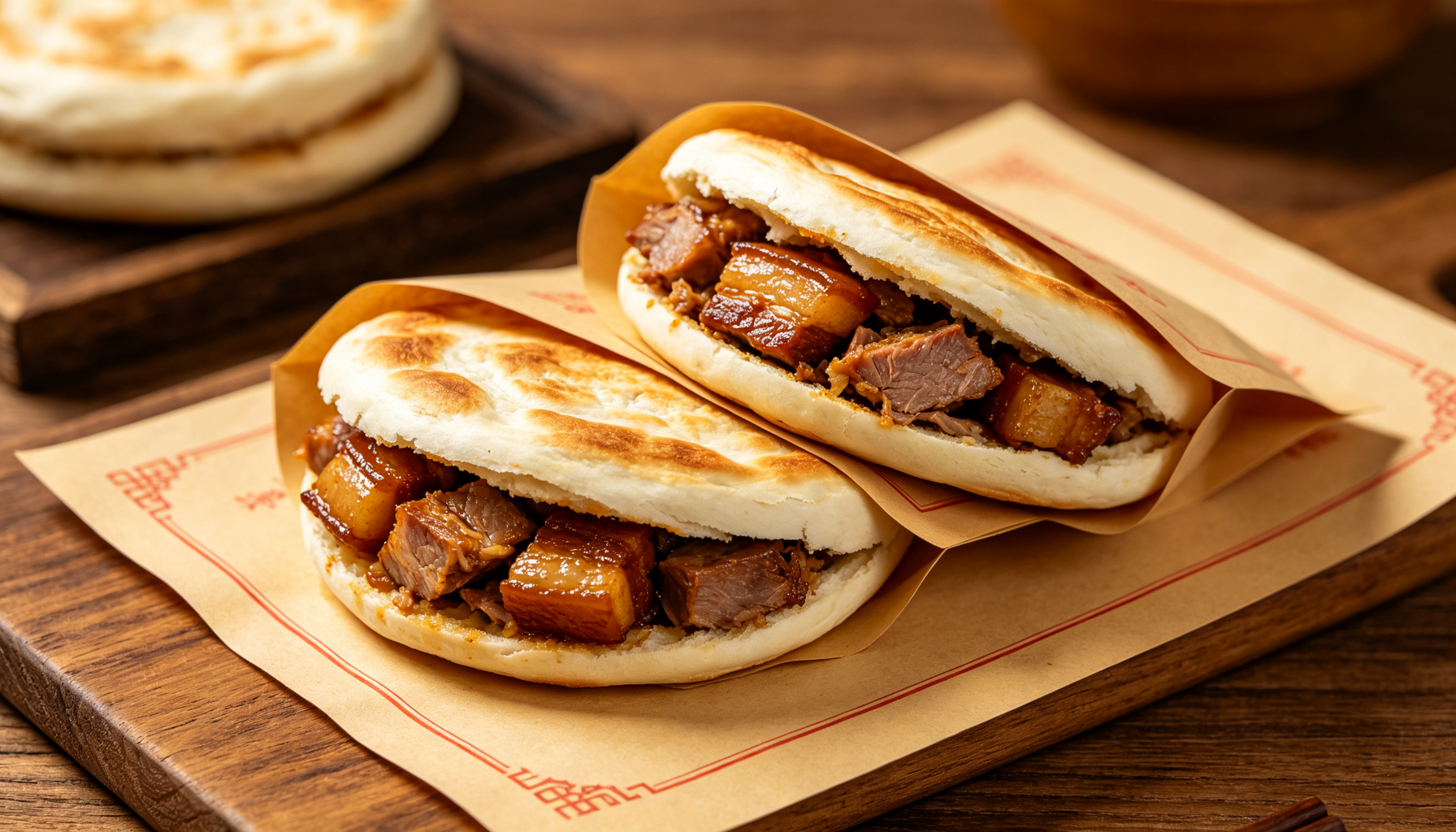
Braised pork in crispy bun. 'World's first hamburger.'
 Popular
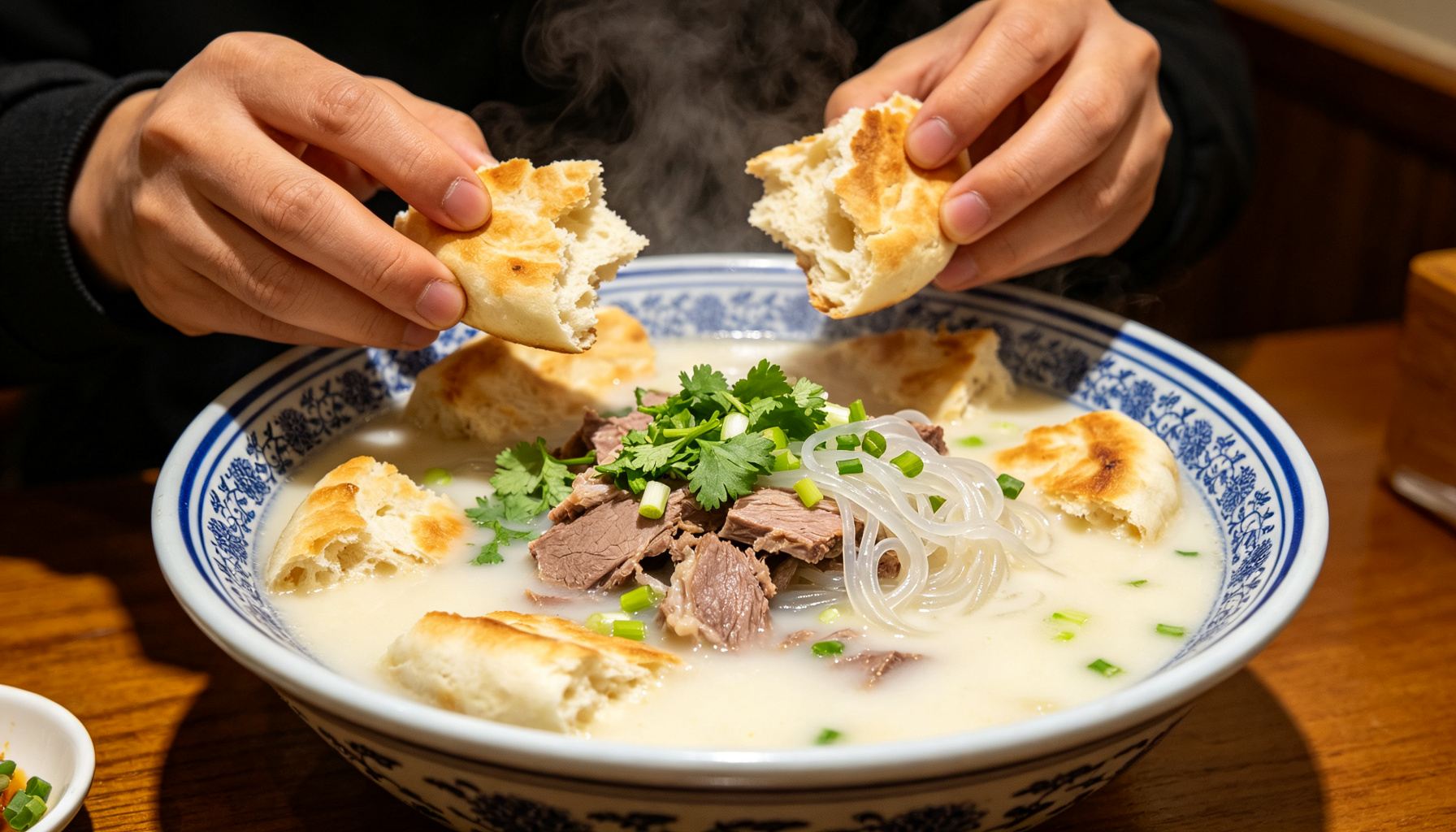
Tear bread into pieces, kitchen pours lamb broth. Hands-on tradition.
 Popular
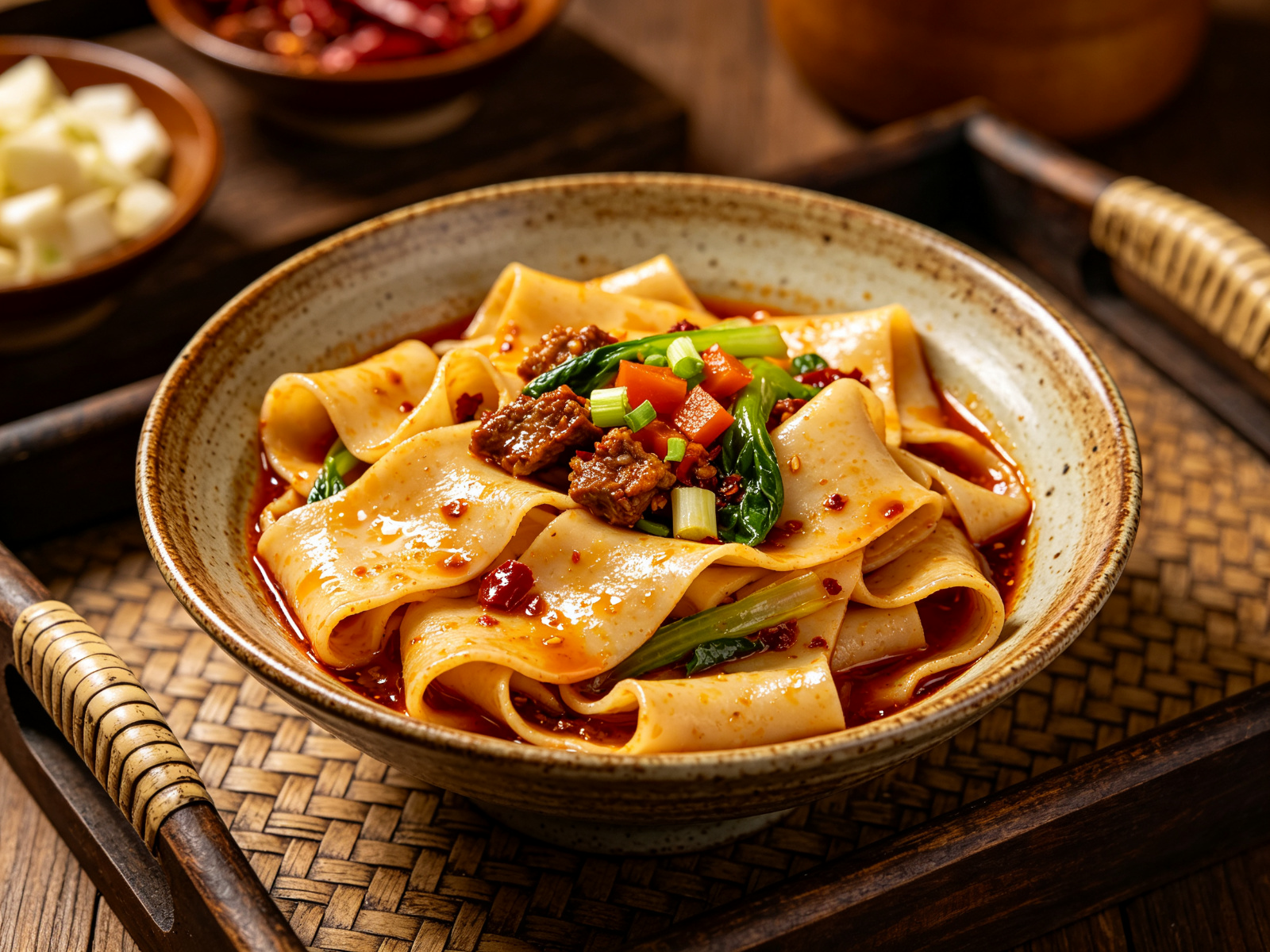
Wide hand-pulled noodles with chili oil. Most complex Chinese character.
 Popular
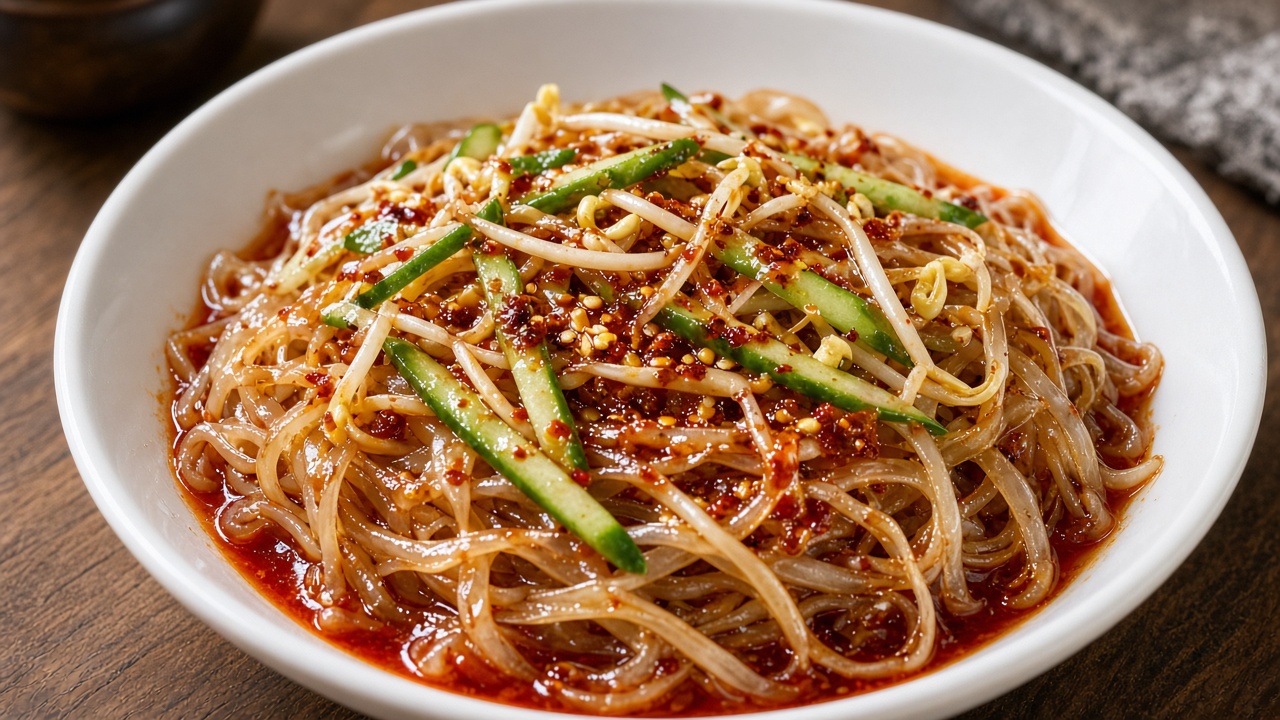
Cold wheat noodles with gluten, cucumber, spicy sesame sauce.
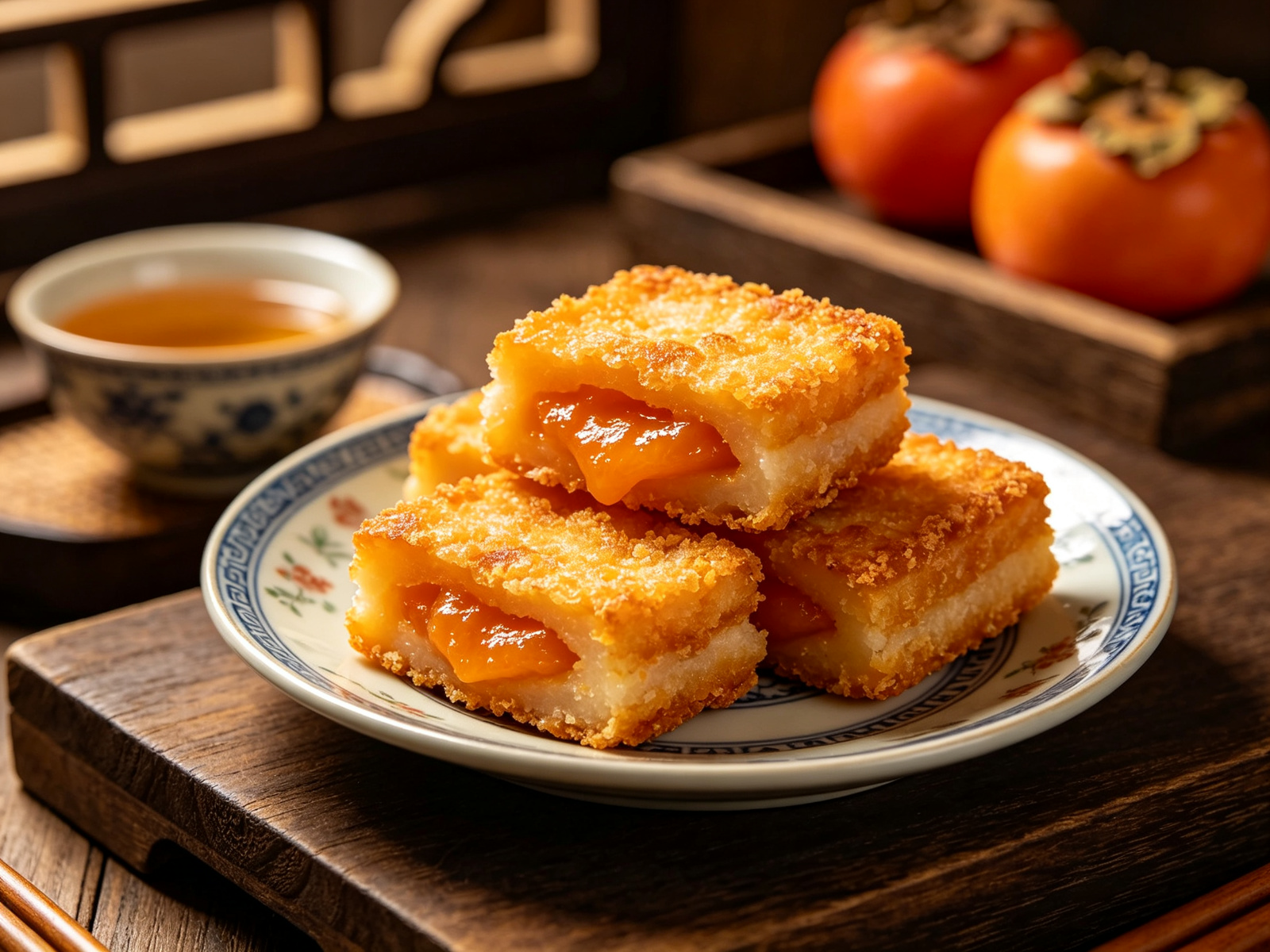
Fried persimmon pulp cakes. Muslim Quarter specialty, best hot.
Best time: March–May, September–November · Semi-arid — cold winters, hot summers
Metro to major gates. Terracotta via tour bus (1h). Didi for city. Bike on City Wall.
Alipay/WeChat with a linked foreign card usually works in chain stores and ticket gates; carry ¥100–200 cash for small stalls. ID matters more than payment: Terracotta Museum, City Wall and Shaanxi History Museum all use real-name ID or passport check-in — bring the physical passport.
Shaanxi History Museum is free but tickets are released on its WeChat account and sell out within days; the Terracotta Museum also requires advance online booking on its official site — never buy from street scalpers. Weekday mornings are the quietest at both.
No flash photography in museum galleries; some halls ban photos entirely. The Great Mosque is an active place of worship — cover shoulders, ask before photographing worshippers, and no pork or alcohol inside the Muslim Quarter lanes.
Terracotta day trips: take the official bus or metro Line 9 to Lintong, not unlicensed 'tour guides' at the station. City Wall bike: brick surface is slippery when wet, and there are age/height limits (roughly 12–65 years, 1.3 m+).
The old city center is walkable and metro-connected: Line 2 hits the Bell Tower and South Gate, Line 3/4 the Big Wild Goose Pagoda. Terracotta and Huaqing are east in Lintong — budget a half day each way.
Hotels and cafes have solid Wi-Fi; get a local SIM or eSIM at the airport if you need continuous data. Google/Meta services are restricted without a pre-arranged roaming solution — settle this before arrival.
Metro to major gates.
Terracotta via tour bus (1h).
Metro, stalls, and rides mostly take Alipay or WeChat. Set up Alipay with a foreign card before you land.
Show the Chinese name “西安” to drivers and staff. It beats a long English explanation.
Book tickets, transfers, and popular tours via partners first — then request deeper local experiences through ChinaPie.
Disclosure: Some links are affiliate links. ChinaPie may earn a commission on eligible bookings at no extra cost to you.
Prices shown are planning references only. Actual rates fluctuate with season, holidays, demand, and partner promotions — the price at checkout on the booking site is authoritative.
Conversion stays soft — clear next steps: plan this city, or request planning help.
Yes for typical tourist areas. Keep phones and bags secure on metro and in crowded night spots; use licensed taxis or Didi.
Depends on your passport. Check ChinaPie Plan & Prep → Visa for 30-day visa-free and 240-hour transit options before booking.
Yes—foreigners can set up Alipay with passport + international card. See /prep/alipay-setup for the step-by-step guide.
Yes, strongly recommended. Without context it's just clay soldiers. Official guide ¥100–200/2h.
Yes—best city for hanfu due to ancient walls and Tang heritage. ¥300–800 for 2h with costume+makeup+photographer.
China offers unilateral visa-free entry to 40+ countries including France, Germany, UK, Japan, South Korea, Singapore, Malaysia, Thailand, Italy, Spain, Netherlands, Switzerland, Sweden, Norway, Denmark, Finland, Belgium, Austria, Ireland, Portugal, Greece, and more. Stay: up to 30 days. IMPORTANT: US passport holders are NOT on the unilateral visa-free list and need a visa. Check latest list at China Immigration official site before travel.
Yes. US passport holders need a visa to enter mainland China. The 10-year multiple-entry tourist visa (L visa) is common: $185 fee, processing 3-5 business days. You can also use the 240-hour transit visa-free if transiting to a third country. Apply at Chinese embassy/consulate or via authorized visa agencies. Many travel blogs incorrectly say US is visa-free — this is false.
Major hotels, international restaurants, and large malls accept Visa/Mastercard. But most small shops, street food, taxis, and local experiences only accept Alipay or WeChat Pay. Link your foreign card to Alipay (Tour Card) for daily use. Carry some cash (¥500-1000) as backup.
Most first-timers do well with 1–3 days. Start with the 1-day core: wall loop + Muslim Quarter + pagoda night, then expand to 2–3 days if you want slower food and culture. Use Plan this city to turn stops into a workable week.
Foreign cards work more often via Alipay / WeChat Pay tourist modes and some metro apps, but coverage still varies by merchant. Keep a small cash float and set payment apps up before peak sightseeing. See the practical section on this hub for city-specific notes.